During term, this page will be refreshed weekly
If the new page does not appear, please click F5 / Reload / Refresh
week 1 (03 Feb) • Intro / Speaking and writing in China
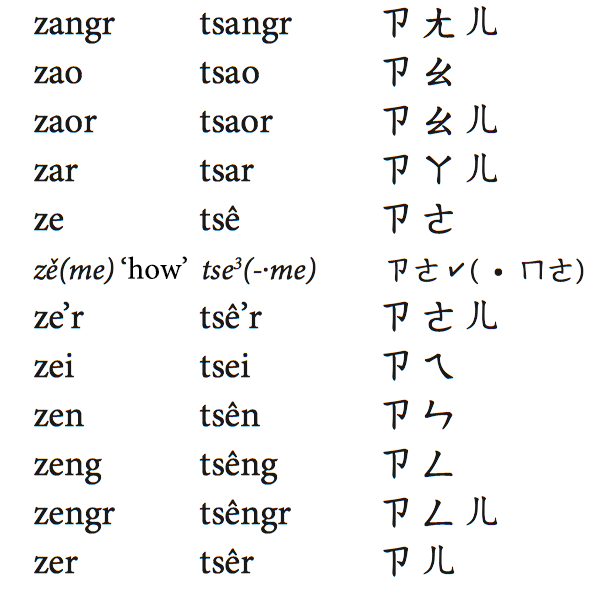
week 2 (10 Feb) • Language and script (1): Writing Chinese sounds
week 3 (17 Feb) • Language and script (2): Chinese writing and writing Chinese
week 4 (24 Feb) • Corresponding with Heaven: The early scribes
Hand-in assignment #1
week 5 (03 Mar) • Observing and documenting language and script
week 6 (10 Mar) • No Class 🟥
week 7 (17 Mar) • Diamonds from Sand City: Dūnhuáng's linguistic treasures
Hand-in assignment #2
SPRING BREAK (24 to 28 March)
BLOCK 4
week 1 (31 Mar) • Doing right by a script: The tools of lexicography
week 2 (07 Apr) •
Term-paper presentations
week 3 (14 Apr) • Brushes with power: Script and society
week 4 (21 Apr) • No Class
week 5 (28 Apr) • Language and script (3): Documenting Chinese
Hand-in assignment #3
week 6 (05 May) • No Class
week 7 (12 May) • Skills session
EXTRA-CURRICULAR
19 May • Excursion to Leiden Wereldmuseum
e-Prospectus catalog number: 5174KCH45 & 5474ISCW7
For details see
the Leiden e-Prospectus and
the Course Fact Sheet
Intro / Speaking and writing in the sinophone worldWriting is – in most definitions – connected with language. But if language travels through sound waves and writing is a visual medium, then how do these two domains interact?
Writing systems displays intricate and diverse ways of mapping the sounds and meanings of language to a visual format.
Once written down, some elements from speech are preserved and some are lost. And vice versa: the visual signal may transmit components from the spoken original, but also features which are absent in spoken form.
In this first session, we will explore how language comes to us through the Chinese script – and how fast such modes can change.
...and contact me for any questions
Texts
趙元任 Yuen Ren Chao, 序 "Xù" [Preface]
In: 趙元任 Yuen Ren Chao, 中國話的文法 Zhōngguóhuà de wénfǎ [A grammar of spoken Chinese].
香港 Hong Kong: 中文大學出版社 Chinese University Press, 1980, frontispiece.
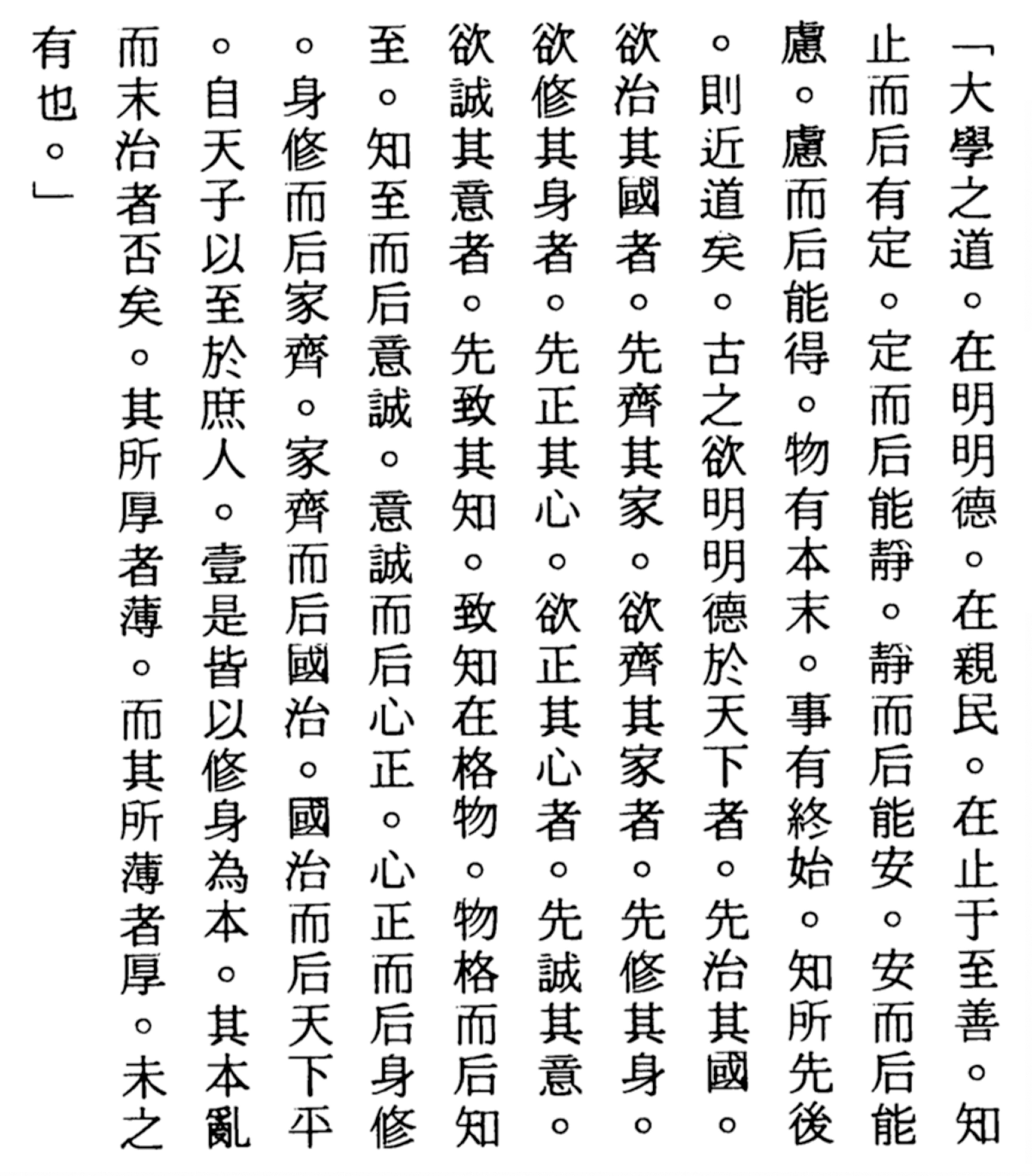
Translation of Yuen Ren Chao, A grammar of spoken Chinese.
Berkeley: University of California Press, 1968. Translated by 丁邦新 Pang-Hsin Ting.
Chao's 序 will be handed out and introduced in class. For this text, no preparation is needed.

"The Chinese script"
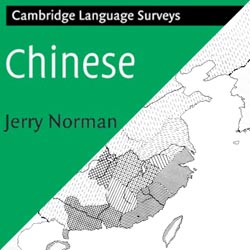
In: Jerry Norman, Chinese.
Cambridge: Cambridge University Press, 1988, Chapter 3 = pp. 58-82.
Availability at Leiden:
- from the Asian Library, on the linguistics handbooks shelves;
- as an e-book, through the University Library catalogue
Highly recommended intro to sinolinguistics – get your own copy, and read it!
Please make sure you prepare your answers to all questions & assignments in writing.
1. Read the assigned chapter from Jerry Norman's Chinese.
In preparing this text, please check that you are familiar with
Note down any difficulties you may have in reading the text, and bring your notes to class.
technical terms in English and in Mandarin (including the corresponding Chinese characters);
names and dates for dynasties, historical periods and historical figures;
geographical designations.
2. On p. 58, the origins of Chinese characters are outlined.
a. In English, do you know a term for the study of writing systems? And in Mandarin?
b. Can you name (at least) three families of scripts, i.e. writing systems of the world which (as far as we know) developed independently?
c. Is the oracle bone script the undisputed precursor of the modern Chinese character script?
d. Can you name (at least) seven different Sinitic languages?
Please give the English and in Mandarin names for each of these, as well as the Chinese characters (简体 & 繁體) for each name.
e. What is the oldest Sinitic phase which has been reconstructed in phonological detail? Please give (approximate) dates.
f. Is the language encoded by the oracle bone script the undisputed precursor of the modern Sinitic languages?
3. The ideographic notion, i.e. the notion "that Chinese characters in some platonic fashion directly represent ideas rather than specific Chinese words" may be "patently absurd" (pp. 60-61), but it is immensely popular nonetheless.
Find a reference (in print or online) which clearly demonstrates, or is clearly based on, the ideographic notion.
a. From this source, note down one specific statement or claim demonstrating this notion.
b. Formulate a counter-argument against this specific statement or claim, basing yourself (at least in part) on the information in section 3.1.
4. Pages 67-69 introduce the 說文解字.
In one or two sentences, summarize the significance of this work
for the study of the Chinese script; and
for Chinese lexicography.
5. On p. 76, please study Table 3.6 carefully, including the notes on p. 77.
a. Can you read all characters listed in the Table?
For your reference: see e.g.
- 國際電腦漢字及異體字知識庫 / International Encoded Han Character and Variants Database.
- 汉字全息资源应用系统
- Chinese Etymology / 字源
- 小學堂文字學資料庫
- 康熙字典網上版
- ...or: find your own, and bring your suggestions to class!
b. Can you give more recent examples of individual characters created in order to "adapt[...] the traditional script to the modern language" (p. 75)?
6. In note 8 of p. 81, please define the term homophonous in your own words.
7. In note 10 of p. 82, it is noted that "the alternation of words beginning with sh and r in a single phonetic series is unusual".
The note discusses the simplified character 让, but the remark on "phonetic series" is strongly rooted in tradition – in other words, in the traditional script.
a. In your own terms, what is a "phonetic series"?
b. Can you find an instance of alternation between Mandarin sh- and r- within the traditional character script?
8. In the same note 10, consider the example of ràng 'to allow' again.
Note that "ràng" is italicized, but " 'to allow' " is placed within single quotation marks.
a. In your own words, formulate the difference between these typographical conventions.
Which linguistic units do they represent?
b. Can you list other typographical conventions, representing other linguistic units?
For each unit, give English and Mandarin names, as well as the Chinese characters (简体 & 繁體).
c. Is there also a typographical convention which represents items as orthographic units, i.e. as the written forms of a script?
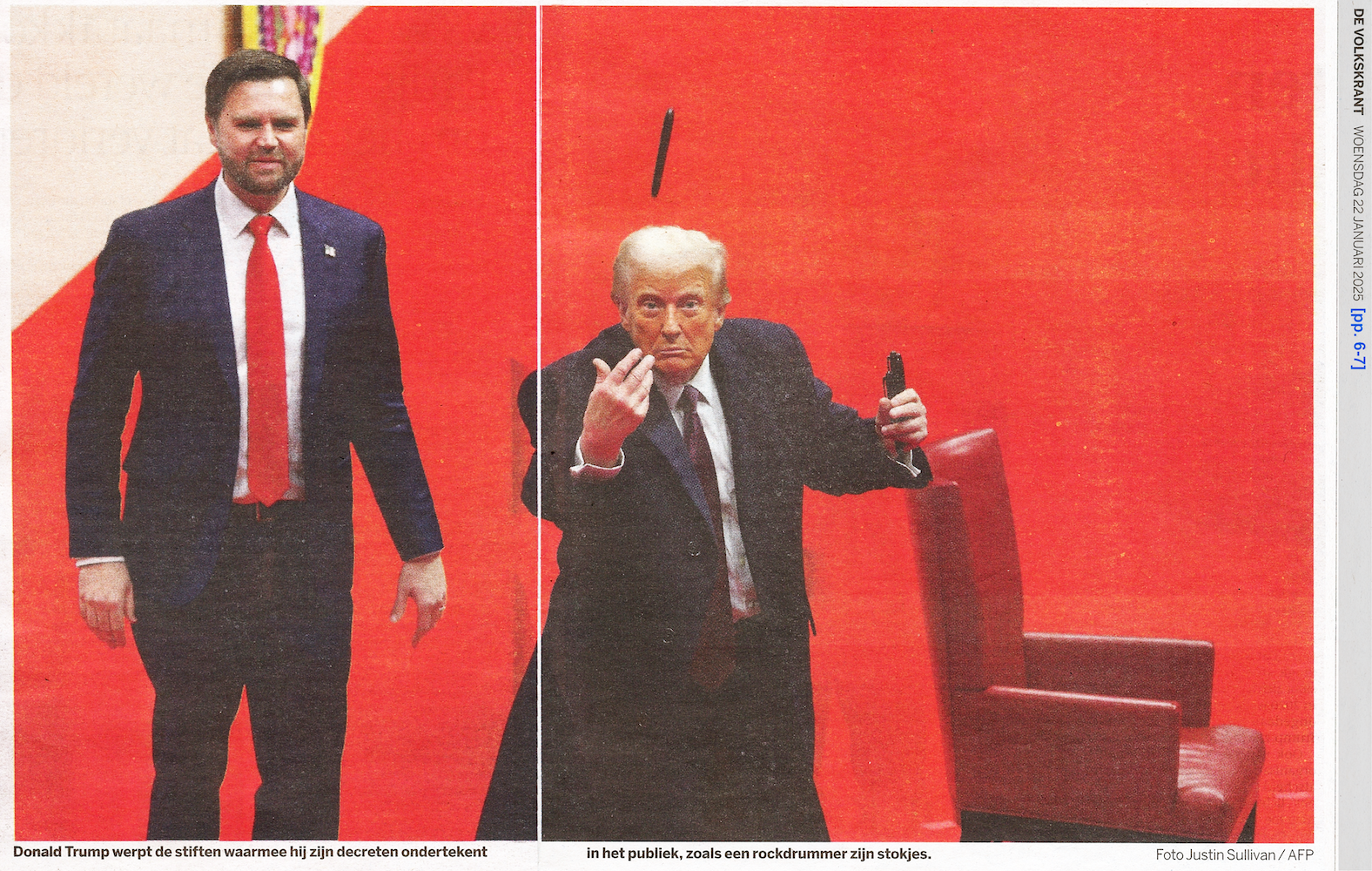
...and an encoreIn the news: Throwing pens
Image source:
Justin Sullivan / AFP
As we saw in today's session (e.g. assignments 2c & 2f), the earliest known ancestor of Chinese character writing is the oracle bone script.
One curious fact (or non-fact?) about this script is that while it has escaped oblivion, no oracle-bone writing stylus has survived — or at least: none has been identified as such.
Fast forward to 2025, when a newly elected president turned the signing of executive orders into a public show.
9. Now, keeping the thematic context of this course in mind, please list some similarities between the new president at the signing ceremony and an oracle bone scribe carving his text.
Language and script (1): Writing Chinese soundsLanguage is all about sounds and meanings. It follows that any effort in linguistics needs to document auditory as well as semantic details. In short: we need conventions of linguistic transcription.
We will take a hands-on approach, going through various principles of transcription while applying these to examples from Chinese languages.
Today's session will consist of three parts:
1. Last week's round-up:As requested in class: we start with a re-run of assignment 7; and we will wrap things up with last week's Encore.2. Phonetics 101:3. Linguistic transcription:Overview, guidance & hints, plus "everything-you-wanted-to-know-about-phonetics-but-where-afraid-to-ask" opportunities
Phonetic, phonological and semantic notations, with examples & exercises
Texts
"§ 2.8 Phonology"
In: Jeroen Wiedenhof, A grammar of Mandarin.
Amsterdam: John Benjamins, 2015.
§ 2.8, pp. 53-55: see this week's Brightspace announcement
Individual items:
10. For Anna, Adrianna, Dorien, Kristina and Zhuolin:
- Please contact your classmates, ask them to share their class notes with you, and check these carefully
- Check the format requirements below
- Send me your answers to assignments 1 through 8 as a PDF file, attached to an email to
- Please use the following filename: <sgfx-week01-Surname.pdf>
- Deadline: Friday 7 February, 1:00pm
A friendly reminder: make sure to prepare all your answers in writing, in English!
Last week's round-up:
11. At the start of this this session, we will check two items left over from last week:
- Assignments 7a & 7b: check your answers again, and join in the discussion!
- The Encore (still relevant this week ;-)
Phonetics 101:
12. A short overview will be presented in class.
Please prepare yourself by consulting some relevant materials:
- the IPA chart, especially the three sections labelled
- "Consonants (pulmonic)",
- "Vowels", and
- "Tones and word accents"
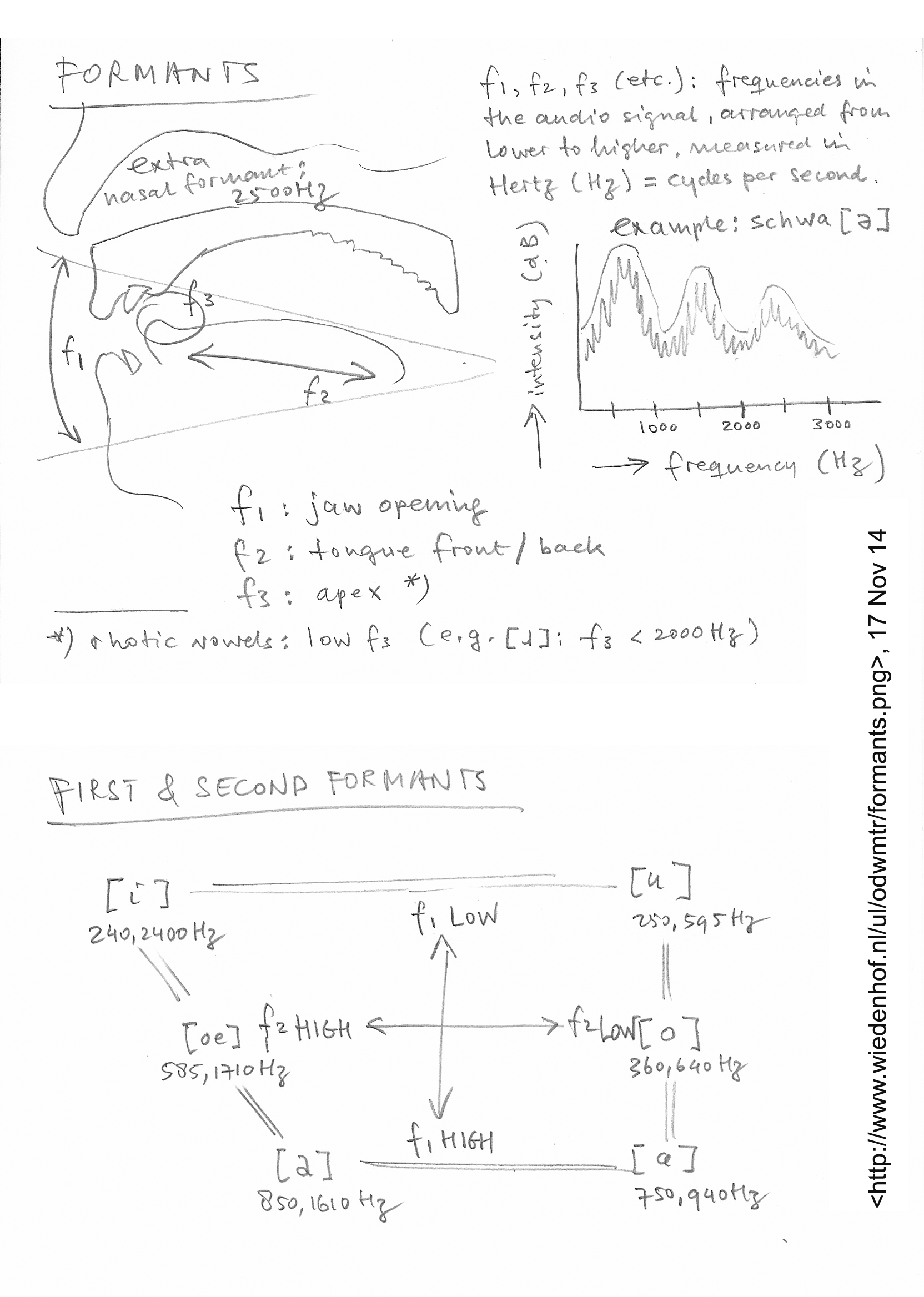
- (if time permits: formants)
In all cases, please try to figure out the general structure and design of the IPA system.
Make sure to note down any problems you encounter, and bring these to class.
Linguistic transcription:
13. Read Sections 1-3 of the "Introduction to linguistic transcription"
a. Note down any questions or difficulties in this text.b. Test yourself by writing out the ten sentences under Section 5, "More exercises". We will check these in class.
14. Read the three pages from Wiedenhof (2015).
Note down any questions or difficulties you run into, and bring your notes to class.
We will discuss your questions and remarks on a page-by-page basis.
15. Now formulate in your own words what constitutes the division of labor between phonetics and phonology.
Two or three sentences will suffice, but you need to use at least two original examples in a language (or languages) of your choice.
Please pay special attention to the way your transcribe these examples.
...and an encoreIn the news: Bu
Jeroen Wollaars, 5 Feb 25
Image & video source:
NOS Nieuwsuur
In our first session, we saw that our first task is to distinguish language and script.
This is not an easy task, so here is an extra opportunity to train this.
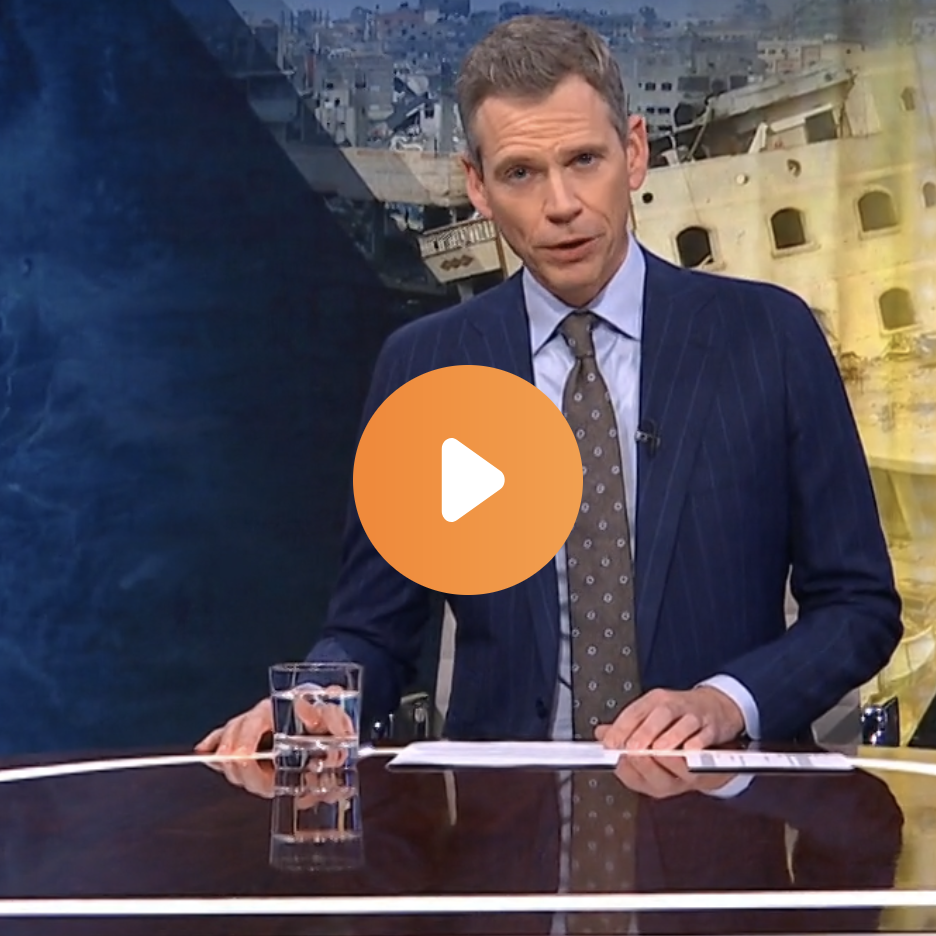
16. Check out the 19-second clip being played here (or in the original newscast at the NOS site, listen to the short section from 1:02 to 1:21).
In this clip, the news anchor first greets his viewers with Goedenavond 'Good evening', then reads out a list of translations of Dutch nee in several languages.
a. In how many languages, and can you name these languages?
b. Identify the Sinitic sample in the clip, and tell us which language it represents.
c. Does the clip also contain samples from scripts? How many scripts, and can you name these scripts?
d. Now, for the language identified in b, see if you can note down in two or three sentences how a script influences the way in which a language is approached.
e. Can the Sinitic syllable heard in this clip be written in Pinyin? If so: how? And if not: why not?
FYI — Lecture on ink rubbings"Surface knowledge:
The roles and purposes of ink rubbings in- and outside China"
- Speaker: Oliver Moore, University of Groningen
- Date & time: Wed, 12 Feb 25, from 3:15 to 5:00pm
- Venue: Lipsius, room 0.30
Image source:
"A 16th century ink rubbing"
Christies, 1 June 2015Organiser: China Seminar
Admission free

Today we continue our exploration of similarities and differences between language and script in the Sinitic context.
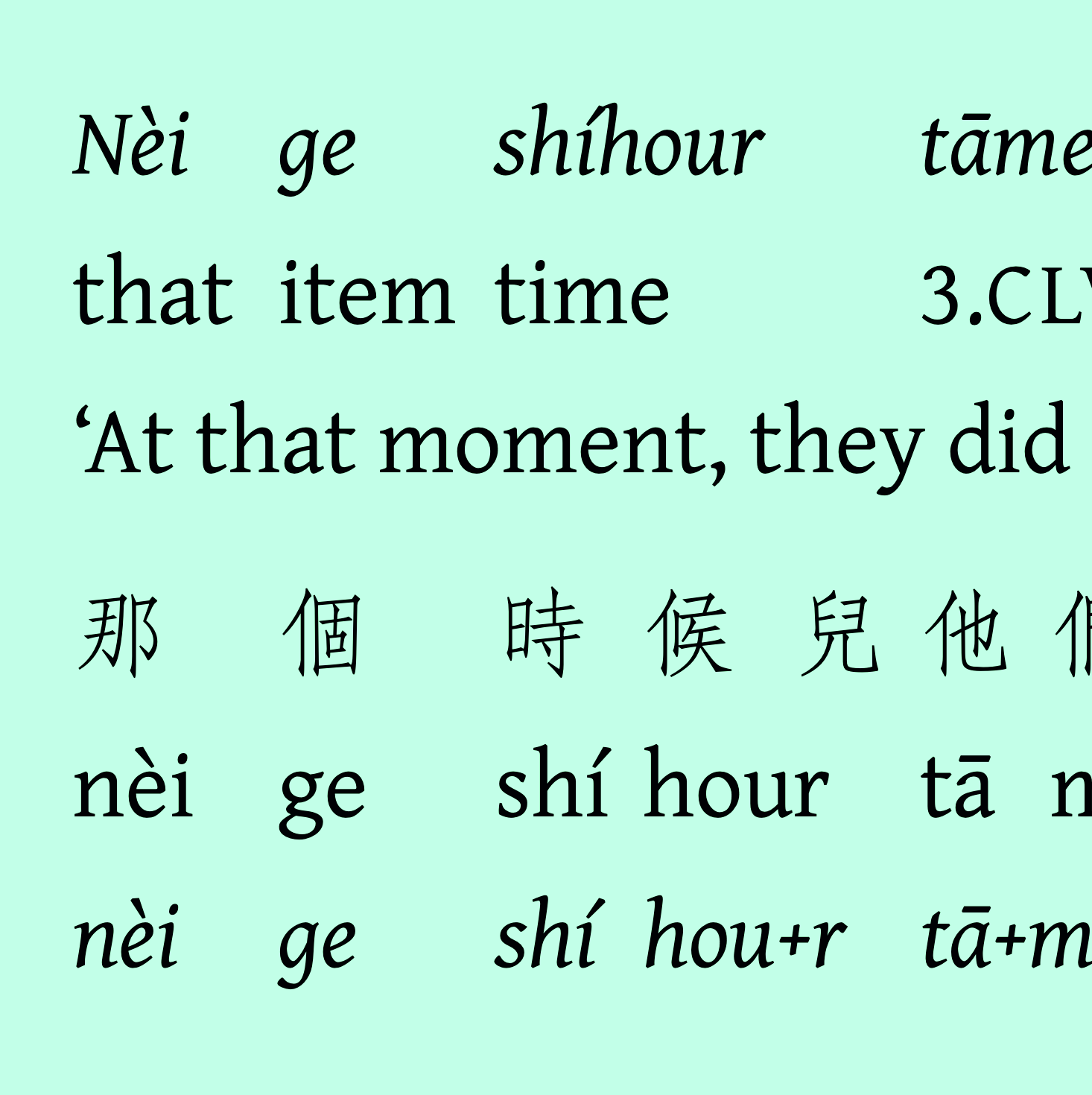
We also return to two (very) different applications of Pinyin in the transcription of Mandarin.
TextsIn: A grammar of Mandarin.
Amsterdam: John Benjamins, 2015, pp. 414-428.
Availability:
In:. 李哲賢 / Lee Jer-shiarn (ed. in chief), 2004 漢學研究國際學術研討會文集 [Proceedings of the International Conference on Chinese Studies 2004].
斗六 / Touliu: 雲林科技大學 / National Yunlin University of Science and Technology, pp. 387-402.
Group efforts:
17. By way of an early warning: in session 4, we will be reading a Chinese text.
For now, if you cannot read modern written Chinese — or if you expect you might benefit from a native command of Mandarin:
- Prepare to buddy up!
- Make sure to contact classmates now, and to set a date & time to prepare Session 4 together.
- As agreed within this group, I have shared a list of email addresses.
Image source:
Cliparts PUBAs discussed, this buddy-up request is more general. Please try to share and join forces in the spirit of this multidisciplinary seminar.
Individual items:
18. For Adrianna, Emma, Rebecca, Shawn and Wieke:
- Please contact your classmates, ask them to share their class notes with you, and check these carefully
- Check the format requirements above
- Send me your answers to assignments 11 through 14 as a PDF file, attached to an email to
- Please use the following filename: <sgfx-week02-Surname.pdf>
- Deadline: Friday 14 February, 1:00pm
A friendly reminder: make sure to prepare all your answers in writing, in English!
Last week's round-up:
19. We start where we left off last week:
a. Assignments 14 & 15: double-check your answers, and bring your contributions to class.
b. Also check the Encore again, as an extra item 16(e) has been added.
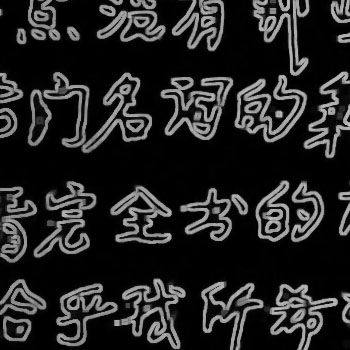
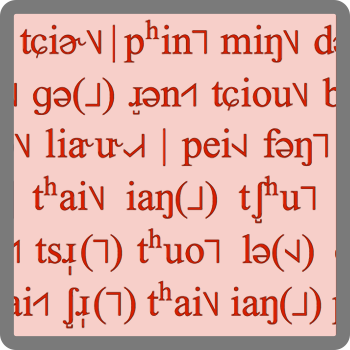
c. To round off Session 2, have an educated guess about the source of the pink illustration shown in the header of that session. (Hint: what elements can you identify?)
"The transcription of Mandarin":
20. Read the text and bring your notes.
We will discuss your questions and remarks in class.
21. In your own words, describe the difference between Character Pinyin and Linguistic Pinyin.
22. The transcription dilemma mentioned at the bottom of p. 419 is also addressed in the "Purpose and effect" text, in Section 2.2.
Please summarize this dilemma in your own words, clearly distinguishing phonetic, phonological and transcription issues.
"Purpose and effect":
23. Read the text and bring your notes.
We will discuss your questions and remarks in class.
24. Section 2.1 mentions a modern (20th-century) instance of linguistic change in spoken Mandarin that is frequently overlooked.
In one or two sentences, write down how this situation came about.
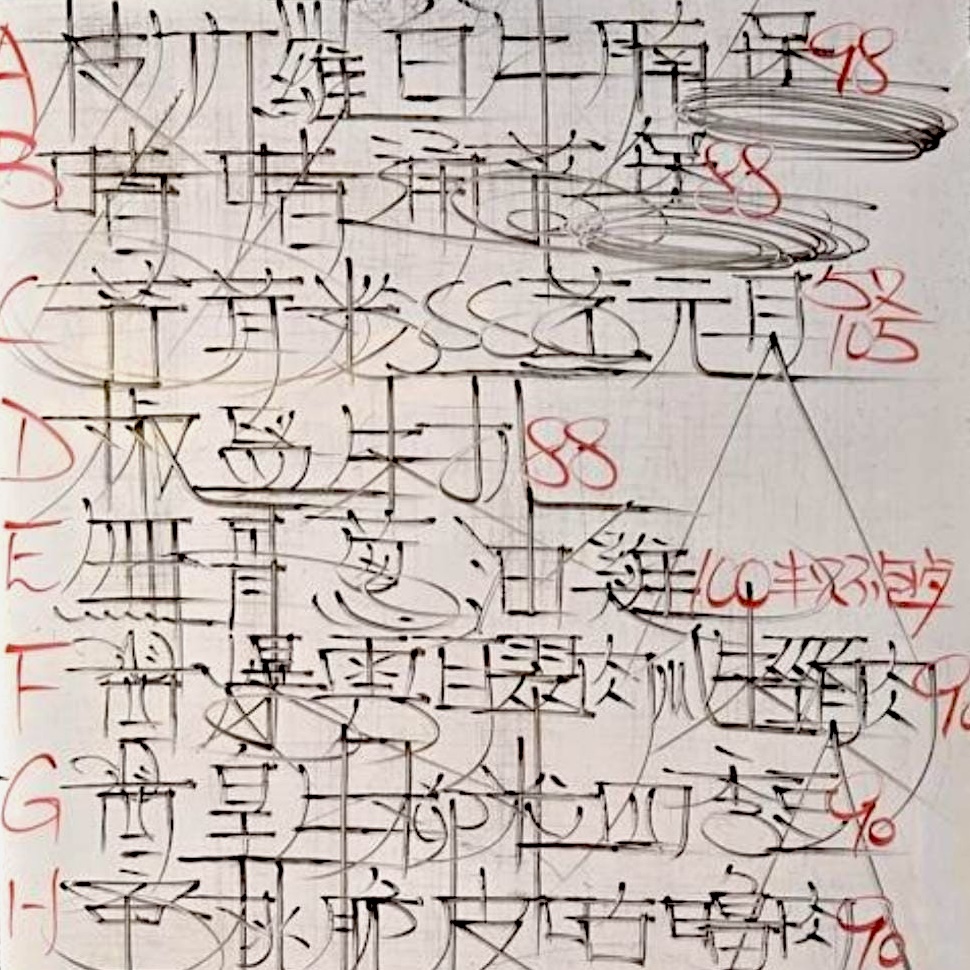
25. Check out this poster.
a. How many syllables can we distinguish in the two lines of (bilingual) text shown here, i.e.
"大鹏一日因风起,Responsibility"?
b. The poster includes an incomplete, "subtitle-style" transcription for the first line, i.e. the line quoted under (a).
Provide your full Pinyin transcription of that line as it would sound in Beijing Mandarin.
Corresponding with Heaven: The early scribes
At the dawn of history, humans were fully modern in the anatomical and in the neurological sense. Their brains, and their languages, were as complex and as diverse as they are today. There were just fewer speakers.
Even at this early stage, the world must have been teeming with linguists. We know nothing about their theories, but their legacy remains with us today, for they created the first writing systems.
The art of writing was invented more than once, and the puzzle how to represent sound and meaning in graphs has been solved in very different ways. The Chinese case offers us a rare insight in the tenacity of some cultural artefacts.
This week, we will:
study the material culture which produced a script whose characteristics have survived into the digital age;
consider the challenges of interdisciplinary studies; and
learn how to introduce a text dating back more than three millennia to a modern audience.
![]() |
|
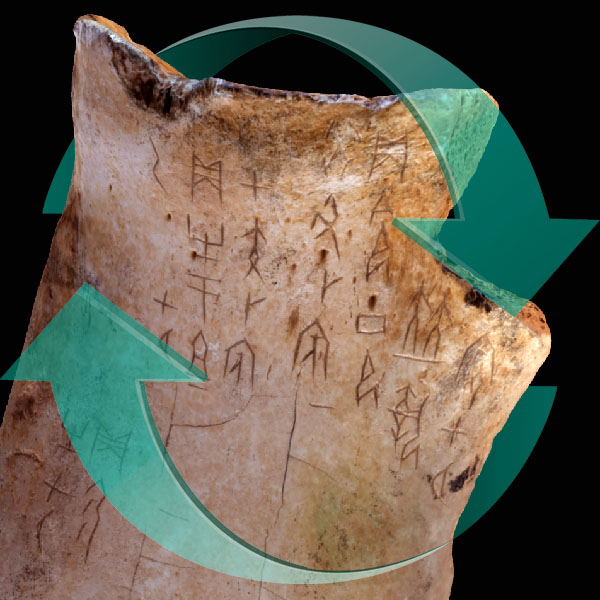
Oracle Bone CUL.52
Interactive scans by Sketchfab, 2015
"Preamble"
In: David N. Keightley, Sources of Shang history: The oracle-bone inscriptions of bronze age China.
First edition 1978; paperback edition, with corrections, Berkeley: University of California Press, 1985, pp. 1-2 (Preamble)
Leiden Asian Library: S-UB DS744.K44 1985.
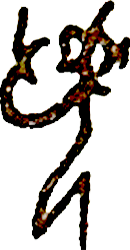
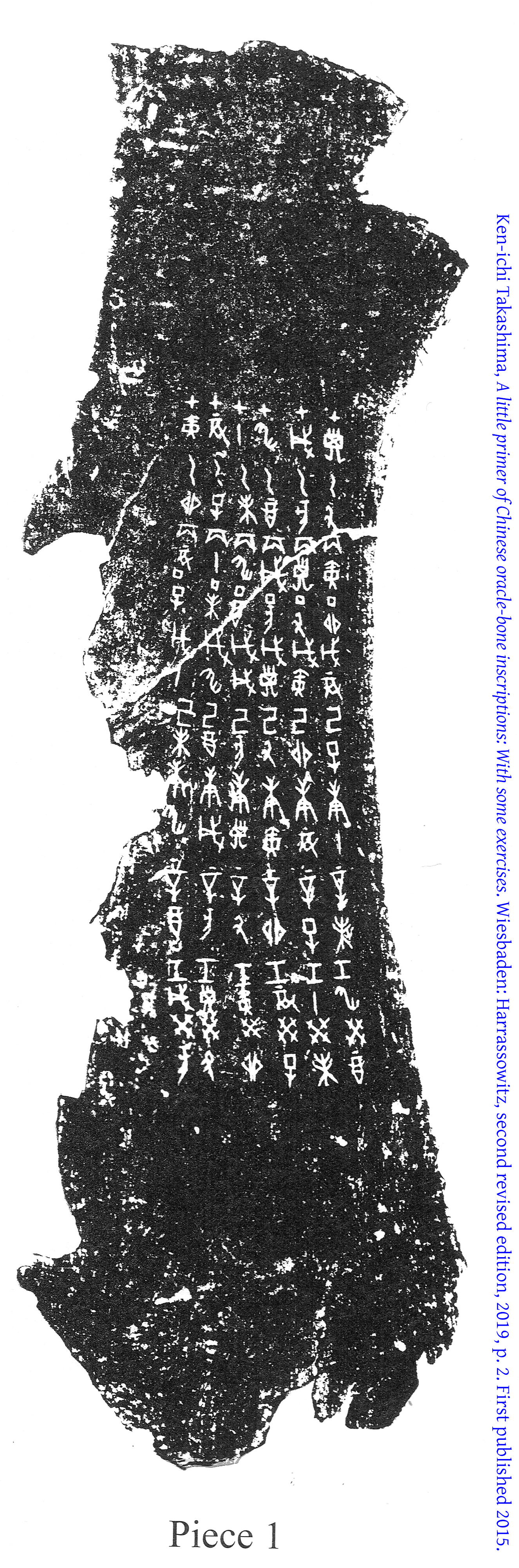
"月㞢食"
In: 李圃 Lí Pǔ, selection and commentary, 甲骨文選注 Jiágǔwén xuǎn zhù [Oracle bone writing: An annotated anthology].
上海 Shanghai: 古籍出版社 Gǔjí Chūbǎnshè, 1989, section 1, pp. 1-8.
Background
NASA (2011)
"Lunar eclipse essentials"
NASA Goddard Space Flight Center
Uploaded to Youtube on 8 June 2011.
Djamouri (1992)
Redouane Djamouri, "Un emploi particulier de you (有) en chinois archaïque"
Cahiers de Linguistique Asie Orientale, January 1992, Volume 21(2), pp. 231-289.
A PDF of this article is also available online at Persée.
Keightley (1985)
Chapter 1, "Shang divination procedures"
Chapter 2, "The divination inscriptions"
David N. Keightley, Sources of Shang history: The oracle-bone inscriptions of bronze age China.
First edition 1978; paperback edition, with corrections, Berkeley: University of California Press, 1985, pp. 3-27 (Chapter 1), 28-56 (Chapter 2).
Available in the Leiden Asian Library: S-UB DS744.K44 1985.
Takashima (2019)
Ken-ichi Takashima, A little primer of Chinese oracle-bone inscriptions: With some exercises.
Wiesbaden: Harrassowitz, second revised edition, 2019. First published 2015.
Thurston (1994)
Hugh Thurston, "The Chinese"
In: Hugh Thurston, Early astronomy. New York: Springer, 1994, pp. 84-109.
Leiden University Library code: GORLAE ASTRON QB016 203.
26. In case you need help with the Wade-Giles spelling:
– For systematic guidelines & conversion, see Appendix D in A grammar of Mandarin (online at Leiden University Library); or
– For ad-hoc conversion, see e.g. the Chinese Text Project's transcription-conversion tool.
27. Sexagesimal means 'based on 60' just as decimal means 'based on ten'. The sexagesimal system is the basis of (not just) the Chinese calendar.
Graphs representing this cycle are well-known from even the oldest specimens of oracle bones.
In case you need help with the sexagesimal cycle:
- A short explanation of the system is given in Tables 9.3 & 9.4 in A grammar of Mandarin;
- For ad-hoc conversion, see e.g. Wikipedia's Stem, Branch and Stem-Branch tables.
28. "Wu Ting's reign" (Keightley 1985: 1):
Wikipedia has a list of Shang Kings.
First, check back on assignment #13, on the "Introduction to linguistic transcription" and on your class notes.
Next, write out the ten sentences under Section 4, "Exercises".
Hand in your work in PDF format as an attachment of an email message to
.
For your hand-in, please consult the format requirements.
For the attachment, please use the following PDF file-name: <sgfx-handin#1-Surname.pdf>
Deadline: Monday, 24 February 2025 at 9:00am
29. With the help of the Reading notes, read the "Preamble" to David Keightley's Sources.
In preparing this text, please check that you are familiar with
- the TIME: names and dates for dynasties, historical periods and historical figures
– e.g. "Wu Ting";
- the PLACE: please check all geographical designations
– e.g. "the powerful Ho".
- technical terms in English and in Mandarin, including the corresponding Chinese characters,
– e.g. "hsin-wei, eighth day";Note down any difficulties you may have in reading the text, and bring your notes to class.
30. In the interactive scan above, please identify the "series of hollows" (Keightley 1985: 18) and "the characteristic pu 卜-shaped crack" (ibid.).
31. Consider the character卜:
a. Which pronunciation(s) and which meaning(s) can you find for modern Chinese languages?
b. Can you find a phonological reconstruction for the pronunciation of this character? (the earlier, the better)
32. On p. 50, it is explained that "[a]s a rule, the inscriptions appear to have been carved above, or to the side of, the pu cracks and on the side of the crack which lacked the transverse branch".
Can you confirm this general rule for our "月㞢食" text?
33. On the basis of 李圃 Lí Pǔ's helpful notes, read and prepare an English translation of the original oracle-bone text.
In other words: please translate the short (nineteen-character) text shown on p. 1.
In preparing this translation, please take notes about any difficulties encountered in reading Lǐ's commentary.
We will discuss Lǐ's text in class, page by page if necessary.
34. Oracular text, line 4, character 2:
In your own words, define the relationship between the character 㞢 and the character 有.
You should minimally formulate what you know on the basis of Pǔ's comments, combined with your own experience.
For more background, you may consult Djamouri (1992).
35. Do you know if there are any oracle bones to be seen at Leiden? (or if not: in Leiden? ;-) |
Observing and documenting language and script
Image source: Nick Youngson
CC BY-SA 3.0
Alpha Stock Images
Over the past four weeks, we have been looking at script, language, and especially at their relationships in terms of similarities and differences.
We have also noted that contributions to science typically start from simple observations.
For your term-paper preparations, you need to bring your own observations to the classroom, and we start practising this week.
"Writing on language"
Leiden: LIAS/LUCL, 2018
"Observation: An historical example"
Leiden: LUCL, 2022
35. Read this introduction: Writing on language.
Note down any questions about or comments on the text.
We will discuss your notes in class.
36. Read this text: Observation: An historical example.
Note down any questions about or comments on the text.
We will discuss your notes in class.
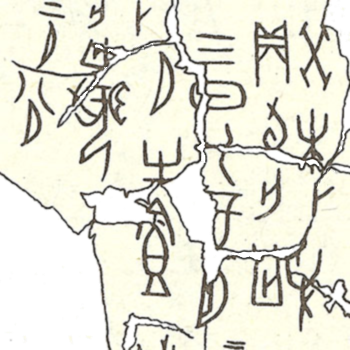
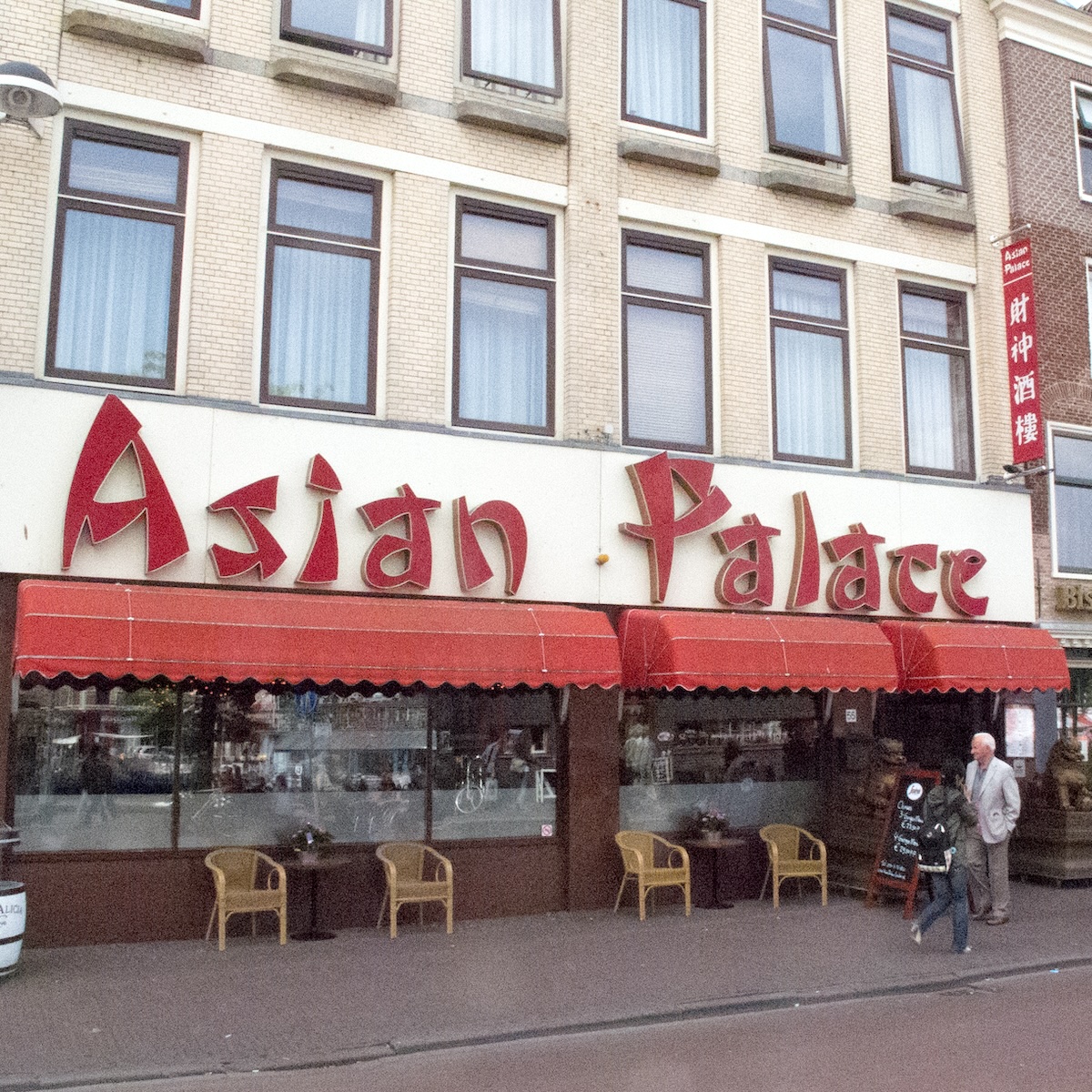
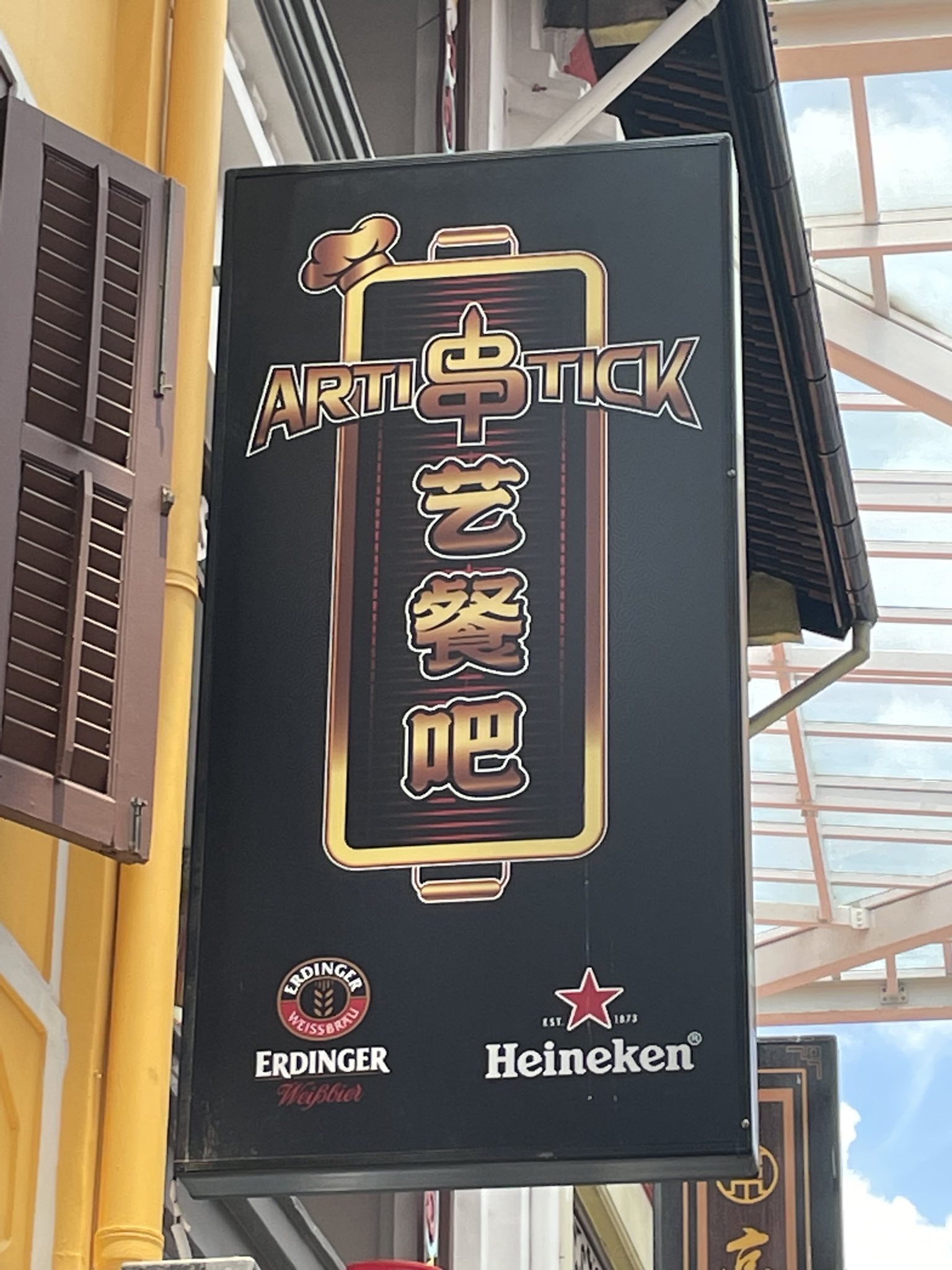
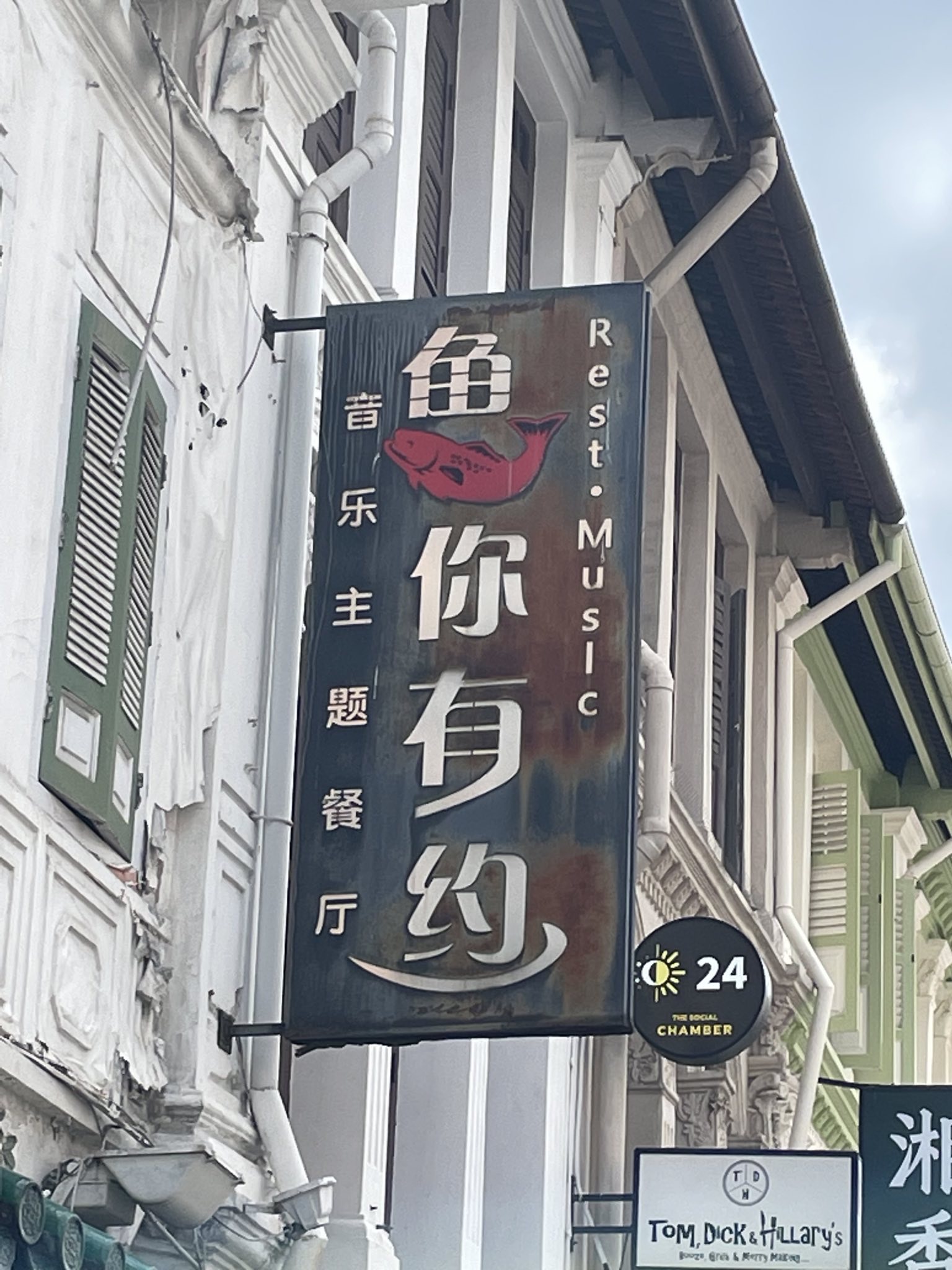
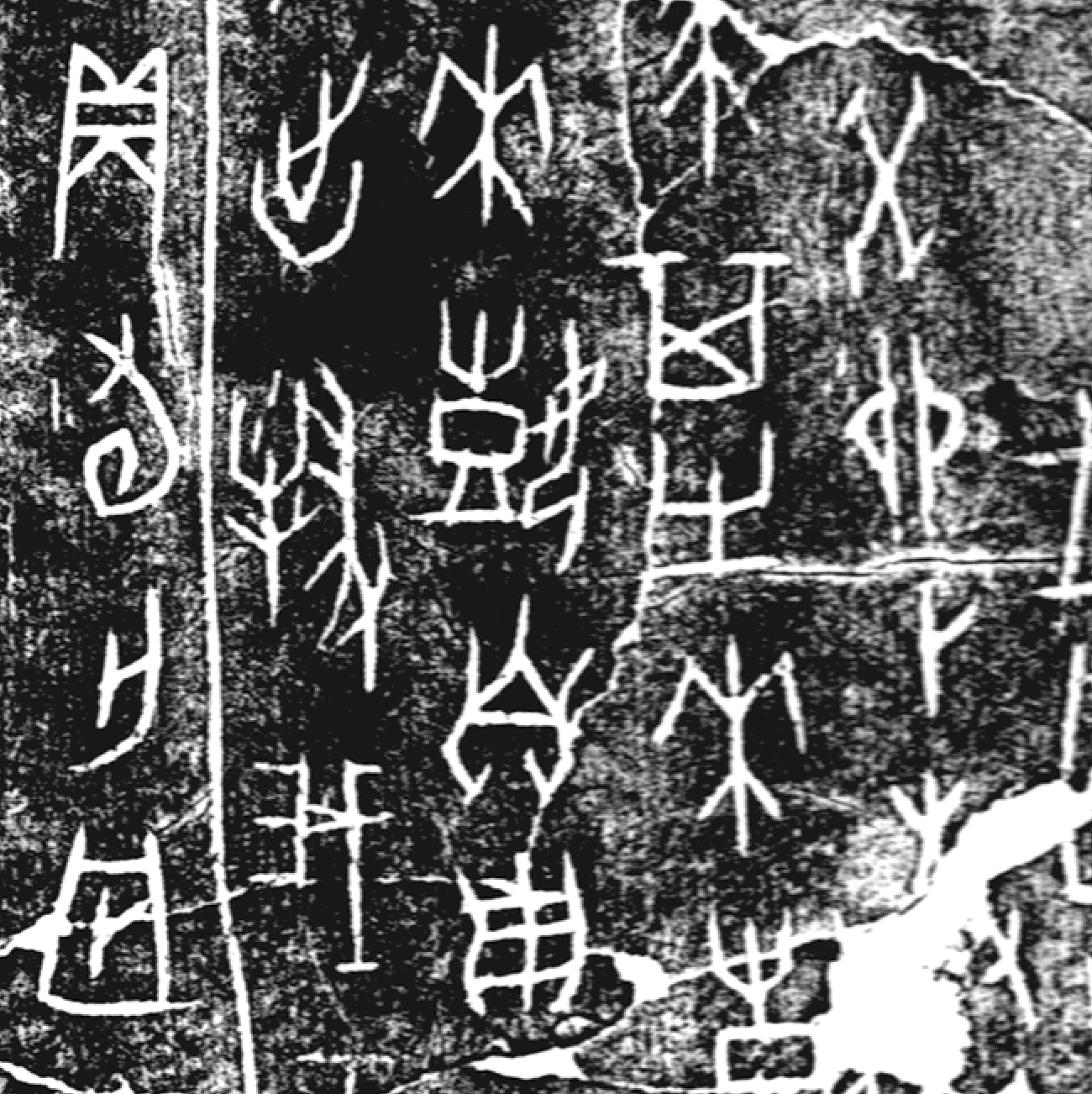
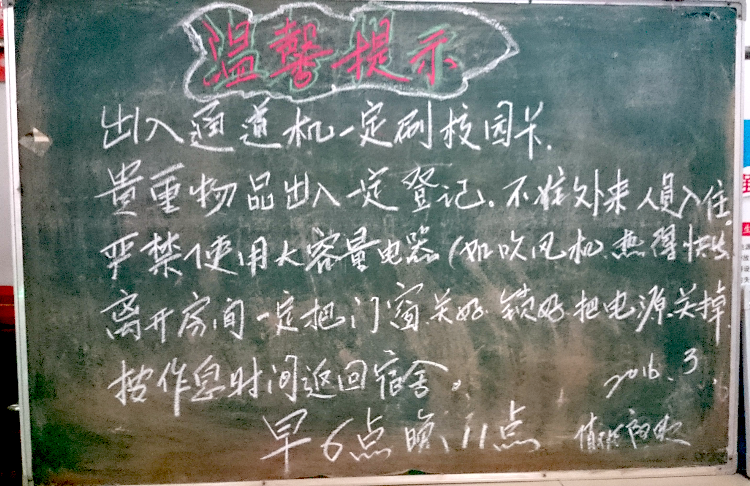
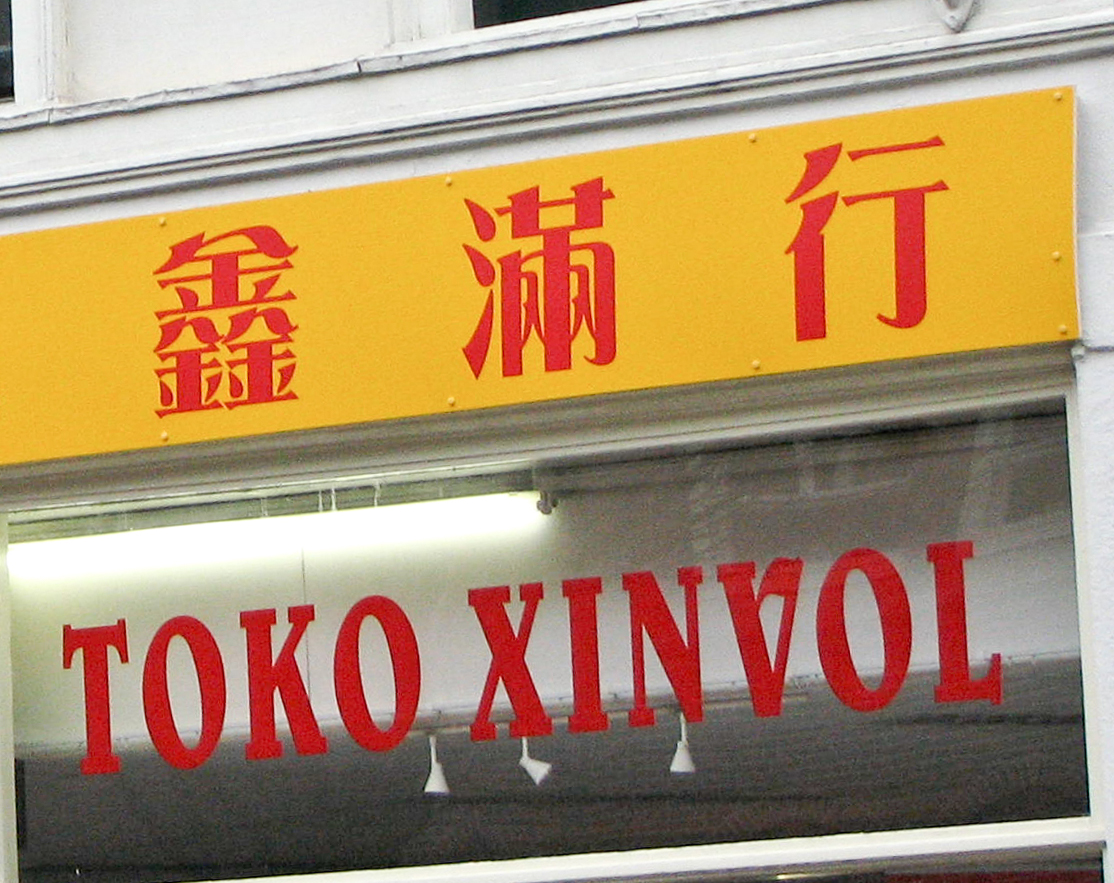
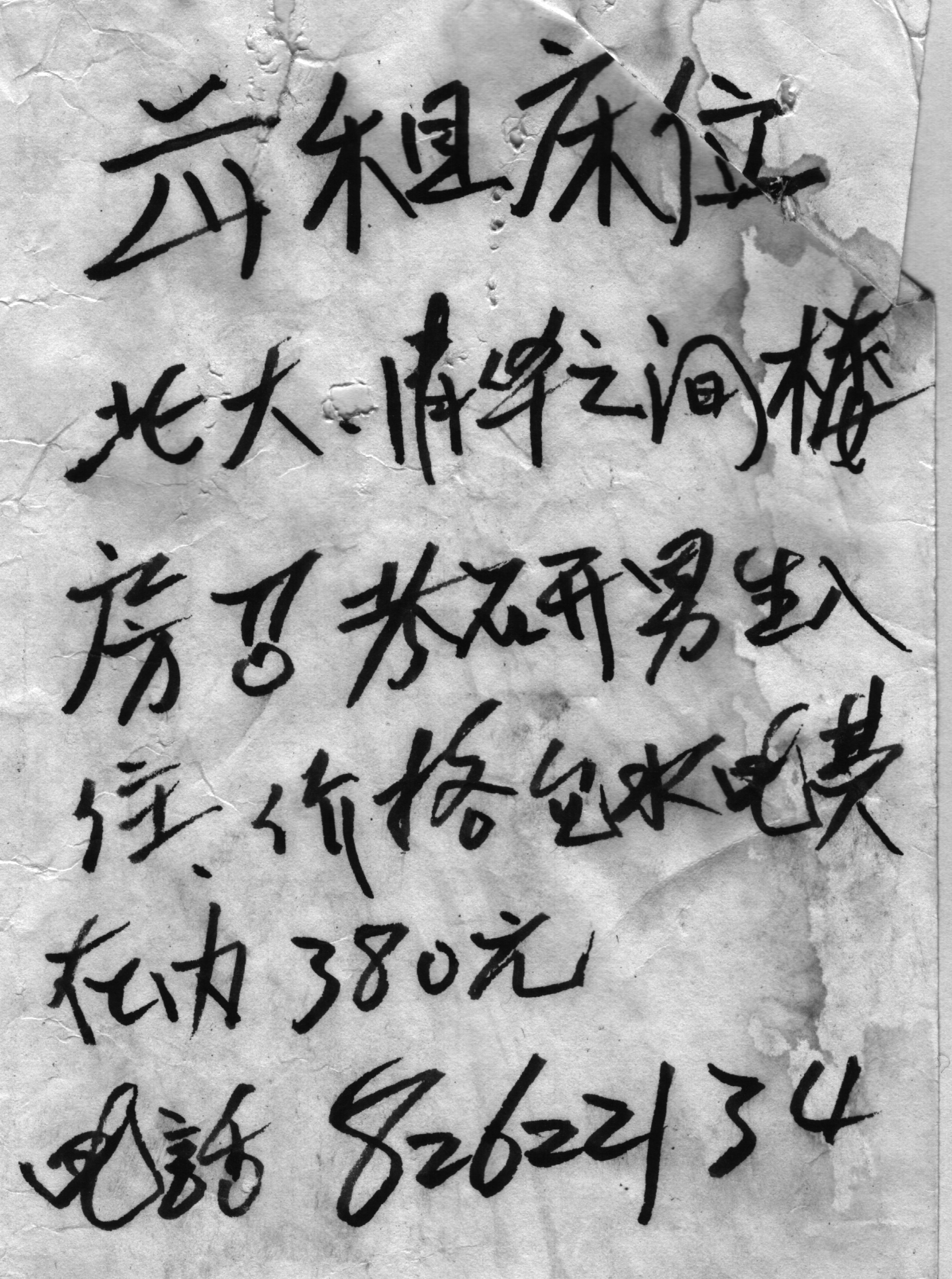
37. Over the past few weeks, we checked a number of examples which might be of sinographic interest.
Some of these examples are repeated below, together with a couple of new items.
a. Now, for each of the six items below, write down at least one observation.
Small is beautiful: use one sentence per observation.
b. Find your own picture:
Bring your own illustration of sinographic interest to class – together with your observation.
–Thanks to Marc Gilbert and Henning Klöter for materials and suggestions
![]() |
![]() |
![]() |
![]() |
![]() |
![]() |
...and an encoreOn memorization: tips and tricks
From prehistoric times, cultural transmission has depended on memory skills. Perhaps ironically, subsequent revolutions in recording techniques have severely jeopardized the survival of basic mnemonic skills.
Since this seminar focusses on writing, let us remind ourselves that the art of writing itself was a case in point:
"For this invention will produce forgetfulness in the minds of those who learn to use it, because they will not practice their memory."
– in Socrates' words, as recorded in writing, ironically... Plato, Phaedrus 275a
In the 15th century, mechanized printing heralded an age where "memory became less critical to knowledge". And in our own times, the extensive use of smartphones is taking its unparalleled toll in the form of digital amnesia.
For some orientation on the art of memory, consider the trailer of this revealing documentary by Janet Tobias and Claus Wehlisch:
Memory games (2018)
Starring memory athletes Nelson Dellis, Yanjaa Wintersoul, Johannes Mallow and Simon Reinhard
Can you memorize the ten Heavenly Branches?
No class
Strike on 10 March: university to remain open
This draft will be assessed as Hand-in Assignment #2.
For general hints on linguistic writing, please consult Writing on language.
On Monday, 7 April (Block 4, Session 2), you will be expected to deliver a (very short!) oral report on your term paper project.
This report will be assessed as your Oral presentation.
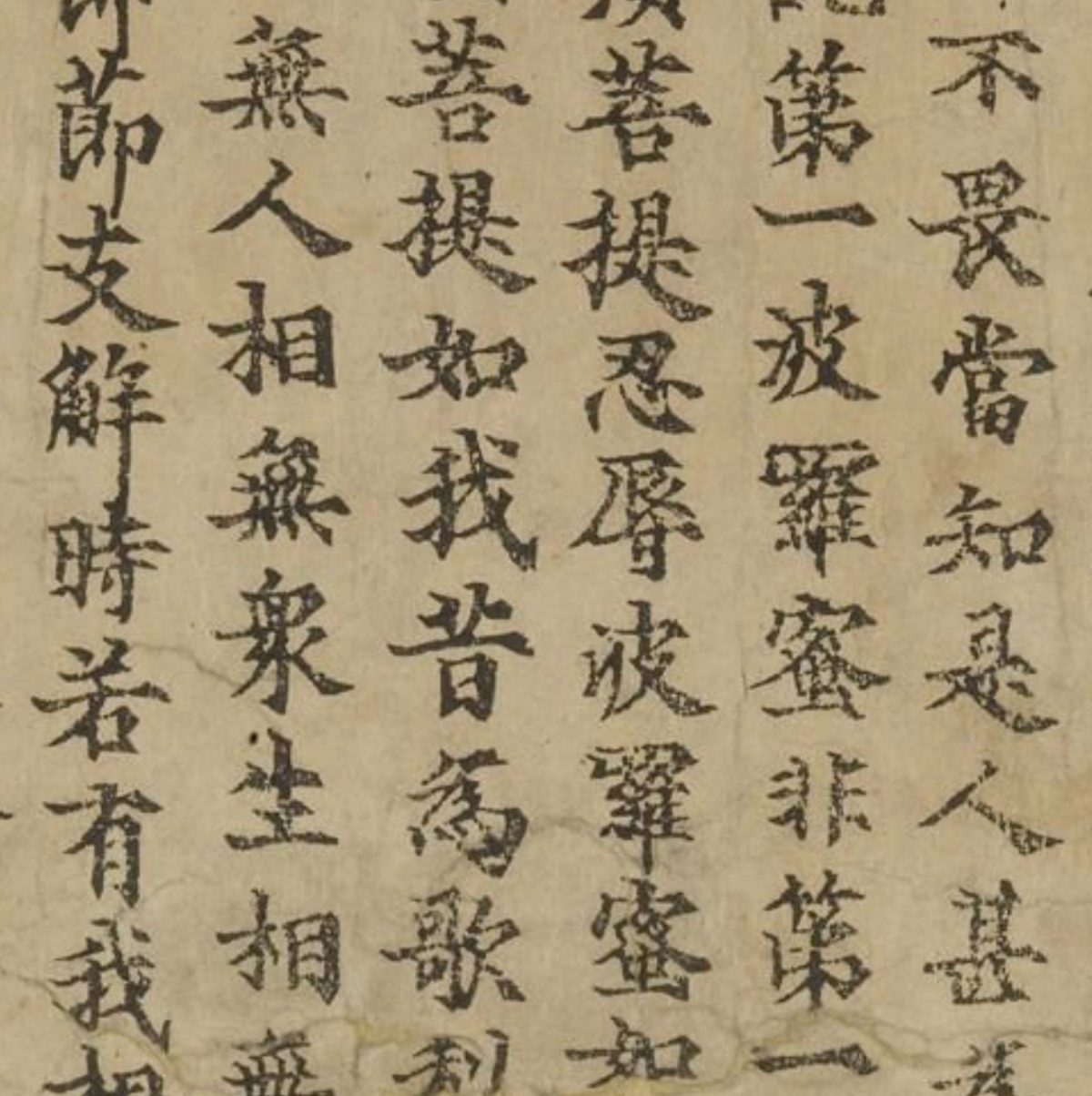
| "By far the largest corpus of early Chinese manuscripts available to us today is the huge cache found by Sir Aurel Stein and others at Dunhuang in far western China in the early years of the twentieth century." Peter Kornicki, "Bluffing your way in Chinese" (2008: 2) |
Since times immemorial, the desert trails connecting India with China were busily travelled by merchants and monks, artists and adventurers.
This week, we zoom in on the oasis town of Dūnhuáng 敦煌, a.k.a. 沙州 Shāzhōu 'Sand City', whose Mògāo 莫高 caves have been a Unesco World Heritage Site since 1987.
One of the first scholars who realized that this site harbored a priceless linguistic time capsule was the Hungarian-born Briton Stein Márk Aurél, later Sir Marc Aurel Stein (1862-1943).
Initially attracted to Dūnhuáng by its Buddhist art, Stein chanced upon a cave full of manuscripts and prints in 1907. Today, the study of Dūnhuáng documents remains a fascinating multi-disciplinary field.
Image source: IDP / IOL Tib J 1364
Susan Whitfield, "Stein's Silk Road legacy revisited".
In: Asian affairs, volume 40, no. 2, 2009, pp. 224-242.
Available as an e-publication from
Leiden University Libraries.
Volume II, Texts and
Volume IV, Plates
In: Aurel Stein, K.C.I.E., Serindia: Detailed report of explorations in Central Asia and westernmost China
Oxford: Clarendon, 1921.
Availability at Leiden University Library's Special Collections
Due to their age, these two volumes are not accessible as "Course Reserve" items.
You need to visit the Special Collections Reading Room to consult these works. This reading room (in Dutch: Bijzondere Collecties) is on the same floor as the Asian Library, but two corridors across.
Special Collections are making these volumes available for students of this Sinographics course.Reserved volumes are arranged by library user names. To save time (for library staff, and for yourself), please state clearly at the front desk of the Special Collections rooms that both volumes are reserved under my name.
The Special Collections desk has a list of students in the Sinographics course. Your library card will be saved during your visit.
Please do check the opening hours!
Unlike the ground-floor reading rooms where your Course Reserves reside, our Special Collections department is closed during the weekend.
Like wise on weekdays, Special Collections hours are more limited than those of the main library.
Reading notesWhitfield (2009):
39. The map shown on p. 225 is available online as a scalable color map from the British Library.
Links to be updated
Here is amirror for this resource.
Susan Whitfield, Aurel Stein on the Silk Road
London: British Museum Press, 2004.
Published at the occasion of the British Library exhibition "The silk road: Trade, travel, war and faith".
Includes a glossary.
Available in the Leiden Asian Library: see the dedicated Course Shelf, number ALCRS00237, for this course.
International Dunhuang Project, "Conserving the Diamond Sutra".
Uploaded on Youtube on 27 May 2009.
Fascinating footage on the multi-disciplinary challenges of preserving the world's oldest dated printed text.
More video's from the IDP are available at their Youtube channel
Peter Kornicki, "Bluffing your way in Chinese".
Sandars Lectures in Bibliography,
Cambridge University Library, 11 March 2008.
Write a short first draft of your term paper and send it to my email inbox on 17 March
If you want, you may bring any last-minute questions to this Monday's class, as long as you send me your PDF that same day.
Or, for more timely preparation: if you need to check in with me during the week before the deadline (10 to 14 March), please email me two or three day/time options.
Minimum content requirements:
- State your observation of a sinographic phenomenon: concrete and specific
- Give your succinct formulation of one (or more) research questions (RQ) about this same observation
- Add any further material, preferably including some methodology (i.e. how will you tackle your RQ)
- For the third bullet, don't worry about a storyline: just give my any draft notes about any loose materials and ideas relevant to your RQ.
If you want, you can repeat the above instructions for a second and for a third observation, and include these in the same PDF. This will make it easier to explore your options during the term-paper writing process (remember the Dutch proverb: schrijven is schrappen ;-)
Please make sure to cover all bullet points for each observation. Maximum length: two pages per observation.
Please note the format requirements.
Make sure you hand in at least two more draft versions in Block 4.
The more versions you hand in, the more feedback you will get. For general hints on linguistic writing, see Writing on language.
As mentioned in class: my email inbox is available for your work (in PDF format) at any time during term.
Please feel free to discuss your plans and ideas, but do not wait until the last moment to make an appointment.
Bottom line: the preparations in Block 3 and the assignments of Block 4 are designed to turn the option of handing in your term paper by the last session in May (i.e. before the actual deadline) into a realistic possibility – hopefully freeing up time for you to devote to other pressing matters in the exam period.
40. Contextual items
(a) Stein's Volume II: Text notices that the sutra scroll was "in excellent preservation and complete".
Elaborate conservation was undertaken in the years 2003-2010, as shown in a British Library video on the Conservation of the Diamond Sutra.
Now, compare Stein's original picture with the photo taken at the British Museum in the mid-1970s.
Can you point out what type(s) of restoration or conservation work had been performed by that time?
(b) Aurel Stein was not only a trained philologist, but also a skilled archeologist, "recognizing the importance of careful excavation, of stratigraphy and of recording each find's location" (Whitfield 2004: 18).
In two or three sentences, describe the technique of stratigraphy. When did this technique originate?
(c) There is a short Chinese text preceding the translation of the Diamond Sutra itself.
What does the first line say?
(d) Among the Dunhuang manuscripts, there are detailed drawings of hands held in many different positions.
(a) Find one of these drawings in Stein's Volume IV: Plates.
(b) Do they depict hand positions or hand gestures? What was the purpose of such drawings?
(e) What is the Chinese term for 'archeology'? And what does it literally mean – morpheme by morpheme?
41. Read Whitfield (2009) [not to be confused with Whitfield (2004) above] and bring your reading notes to class.
We will discuss your questions and remarks on a page-by-page basis.
42. Make a list of all language names mentioned in this text, restricting yourself to languages spoken natively in the areas explored by Stein.
For each of these languages, look up their genetic affiliation (language family, subgroup, branch etc).
For some assistance, try the Linguistic Toolbox at the bottom of this page.
43. First, have a good look at Volumes II and IV of Aurel Stein's original work of 1921.
In Volume IV: Plates, check that you understand the page numbering system.
On page C of Volume IV: Plates, find the photo of the "printed roll" at the lower half of the page;
on the same page, find Stein's inventory number for this item;
and in Volume II: Text, under the same inventory number, find Stein's detailed description of the item.
Now, establish whether Stein himself realized the historical significance of this particular scroll.
44. The International Dunhuang Project (IDP) has uploaded a high-resolution image of the same scroll, which contains the full Chinese text of the Diamond Sutra.
This webpage includes a digital facsimile edition of the scroll, along with a full English translation of the sutra.
- Sanskrit title: वज्रच्छेदिकाप्रज्ञापारमितासूत्र Vajracchedikā Prajñāpāramitā Sūtra
- Chinese title: 金剛般若波羅蜜多經 Jīngāng Bōrěbōluómìduō Jīng (note the Mandarin readings for 般 and 若), abbreviated to 金剛經 Jīngāng Jīng
- English title: Diamond-Cutter-of-Perfect-Wisdom Sutra, abbreviated to Diamond Sutra
|
On the IDP page, if you click on "NEXT IMAGE" once, you will have reached the last line of the printed text, indicating its date of publication. (to see more details, click "LARGE IMAGE") This line of text is lacking in the IDP translation, but you will find an English translation in the short but useful introduction to the Diamond Sutra by the Silkroad Foundation. |
(a) Correct the Silkroad Foundation's English translation of the Chinese date.
(b) Find the name of the emperor ruling at the Táng 唐 court at the time of publication of this scroll.
(c) Use the Chinese-Western calendar converter provided by the Academia Sinica, Taiwan, to check if the Julian date give by the Silkroad Foundation is correct.
(d) Check if you can tell on what day of the Julian week this Chinese edition of the Diamond Sutra was published.
Doing right by a script: The tools of lexicographyImage source: 每日頭條 / KKNews
In Session 4, we saw how the invention of writing was embedded in technological and economic change.
Today, we will explore early advances in Chinese lexicography against the backdrop of philosophical and political developments In Qín 秦 and Hàn 漢 times. We will also have a taste of an unconventional look at the establishment of early writing conventions.
Galambos (2006)Chapter Two, "The Qin and Han creation of the standard"
In: Imre Galambos, Orthography of early Chinese writing: Evidence from newly excavated manuscripts, pp. 31-63.
Budapest: Eötvös Loránd University, Department of East Asian Studies, 2006.
A PDF of this book is available online.
From Wikipedia: The free encyclopedia
![]() |
Image source: Archive.org |
許慎 Xǔ Shèn, 說文解字 Shuō wén jiě zì
说文解字: 附检字 Shuō wén jiě zì: Fù jiǎn zì [Discussion of simple characters and analysis of complex characters: With a character index], 北京 Peking: 中華書局 Zhōnghuá Shūjú, 1963. East Asian Library number: SINOL. 5093
- Online edition: 《說文解字》 at the website of 北京师范大学 / Beijing Normal University
- Paper edition: East Asian Library number: SINOL. 5093. Available in the Leiden Asian Library: see the dedicated Course Reserve Shelf for this course.
45. Read the first two texts:
Note down any difficulties you may encounter in these two texts, and bring your notes to class.
In Block 3, class feedback for reading assignments turned out to be quite limited. So do check back on our Teaching philosophy
for this course!
Especially in Block 4, you can help make this course cater to your interests and needs.
As before, we will discuss your questions and remarks:
46. The third title is a modern reprint of the 說文解字 Shuō wén jiě zì.
(a) Have a good look at this book, either online or on the Course Reserve Shelf in the Leiden Asian Library.
(b) Check that you understand how the work is organised.
(c) Find the characters
,
,
and
in this dictionary.
If you use the online resource for this assignment: please
make sure to select the 大徐本 edition!You can view the scanned pages by hitting the 查看 button:
![]()
For each of these four characters, write down
- the page number for the entry in this modern edition
- the Shuō wén jiě zì radical
- the dictionary's definition of the characters, and
- your own English translation of this definition
47. As announced, in order to help you plan ahead, you can prepare draft versions of your term paper at any time:
Please allow two days between handing in any draft and your appointment.
On Monday 7 April, a short oral presentation will be expected of you about your term-paper project.
Requirements:
- Your presentation will be in English
- You will minimally present your materials, research question(s) and methodology
- Your target audience is intelligent and interested, but not necessarily trained in linguistics or in Chinese (fellow students from other departments may be invited to listen in)
Logistics:
- Maximum duration is four minutes – please time yourself in preparation!
- A short handout for the audience will come in handy, because it will save you time writing on the blackboard: please bring twelve printed copies
- Your handout shows only:
- your name, the date and the name of the course;
- your sinographic materials; and
- your research questions
The hand-out should not include any arguments or description, as you need to present those orally.
- Powerpoints are allowed, but only after prior consulation (over email). Note that setting up your system will cut into your four minutes!
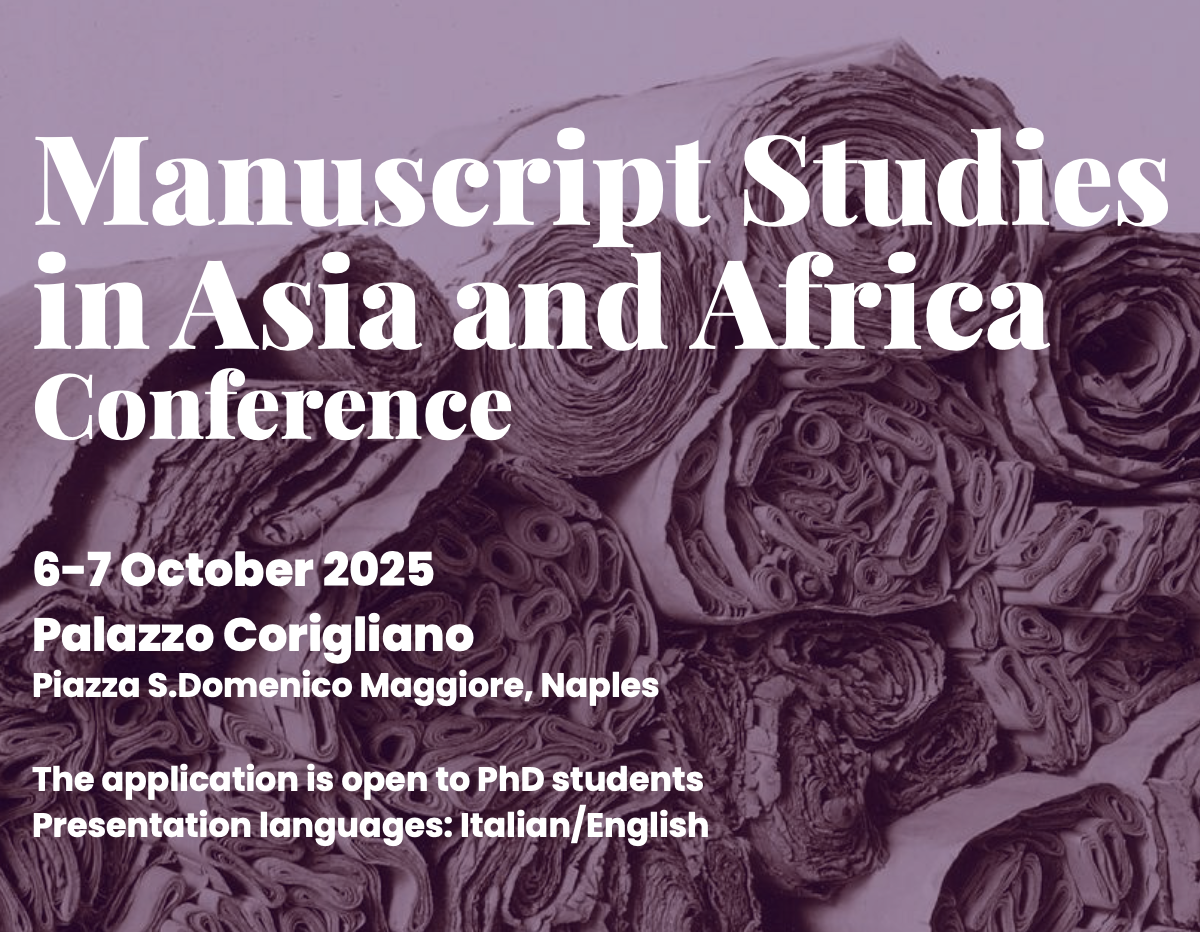
FYI — Manuscript Studies
in Asia and Africa Conference
Dates: 6-7 October 2025
Venue: Palazzo Corigliano, Naples
On 7 April, as announced, a short oral presentation will be expected of you about the subject of your term paper.
Requirements:
- Your presentation will be in English
- You will minimally present your materials, research question(s) and methodology
- Your target audience is intelligent and interested, but not necessarily trained in linguistics or in Chinese (fellow students from other departments may be invited to listen in)
Logistics:
- Maximum duration is four minutes – please time yourself in preparation!
- A short handout for the audience will come in handy, because it will save you time writing on the blackboard: please bring twelve printed copies
- Your handout shows only:
- your name, the date and the name of the course;
- your sinographic materials; and
- your research questions
The hand-out should not include any arguments or description, as you need to present those orally.
- Powerpoints are allowed, but only after prior consulation (over email). Note that setting up your system will cut into your four minutes!
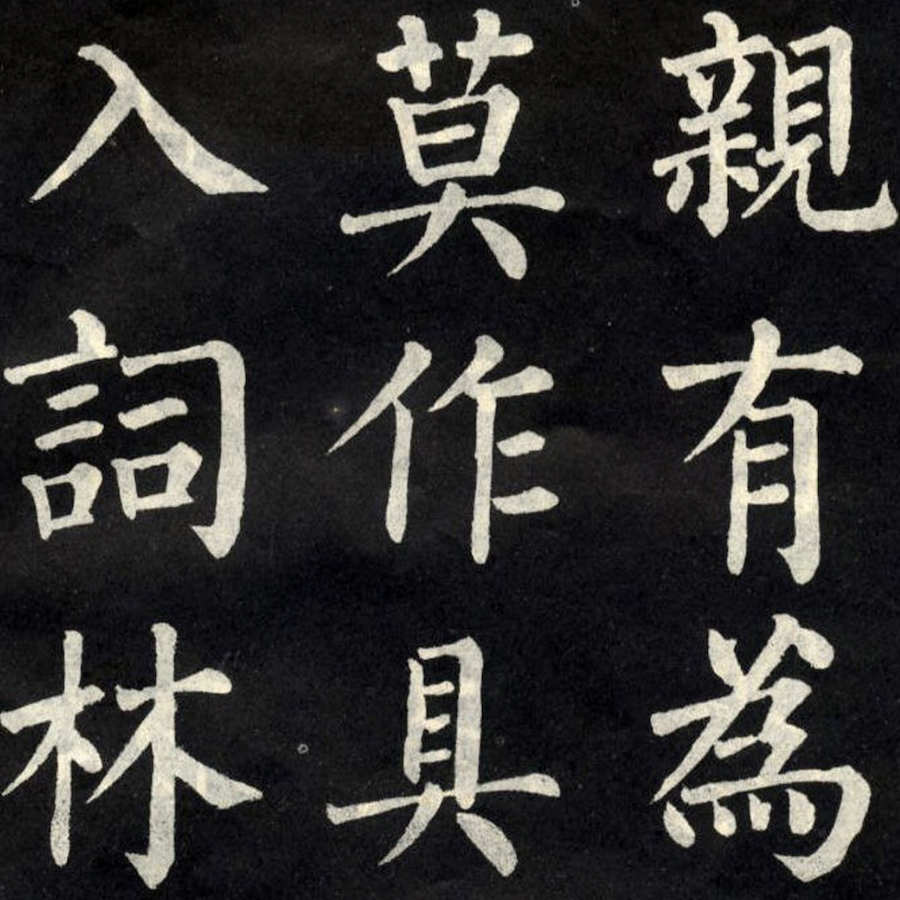
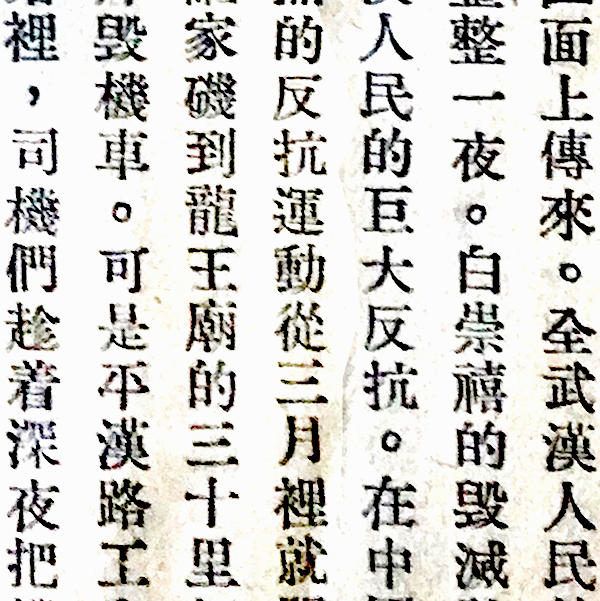
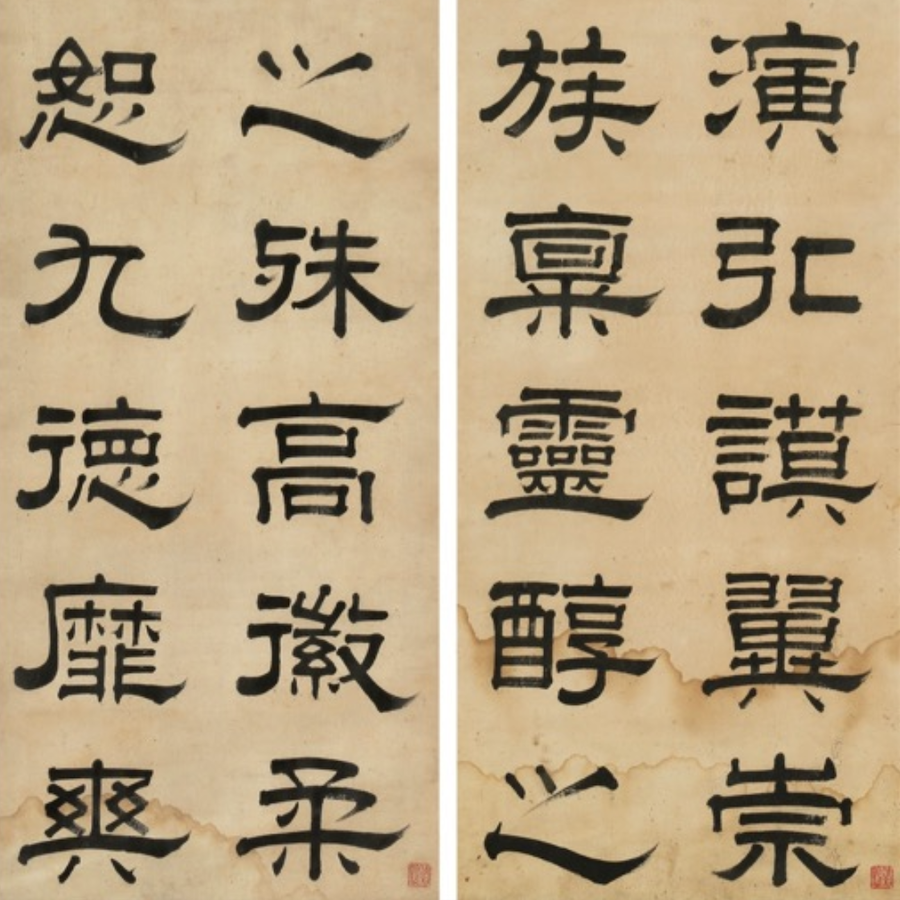
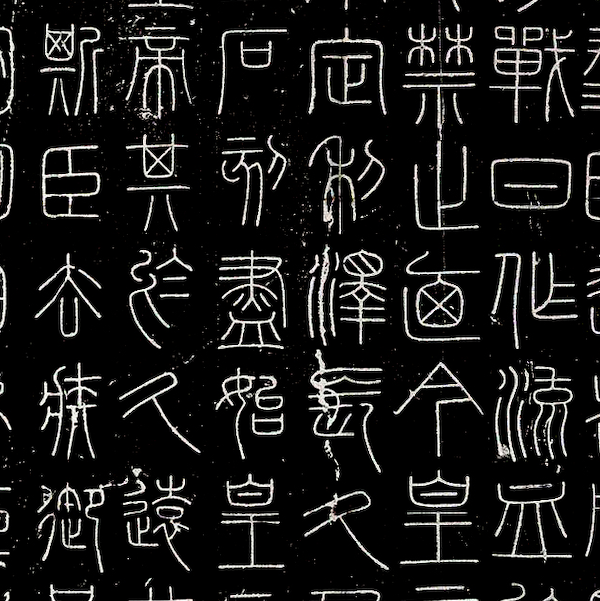
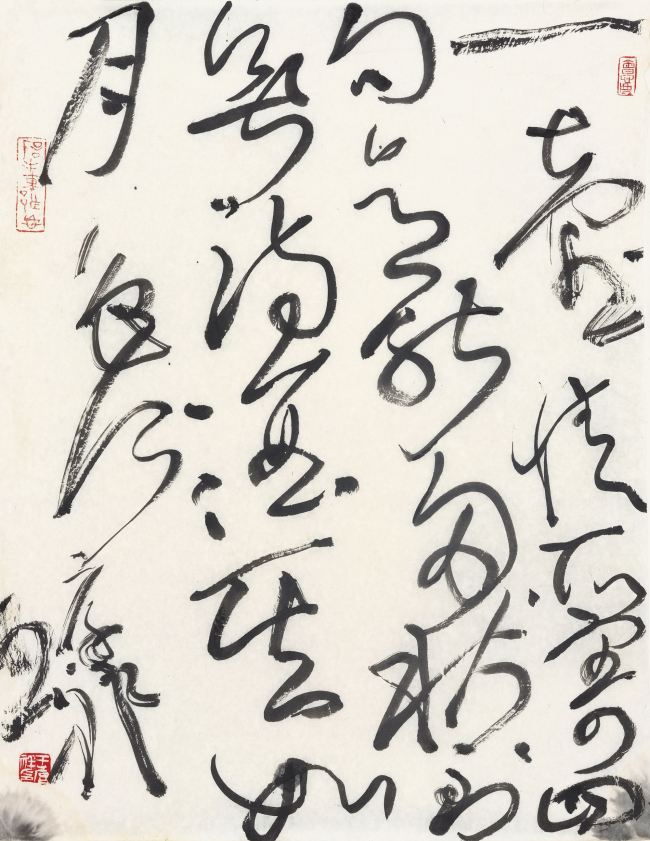
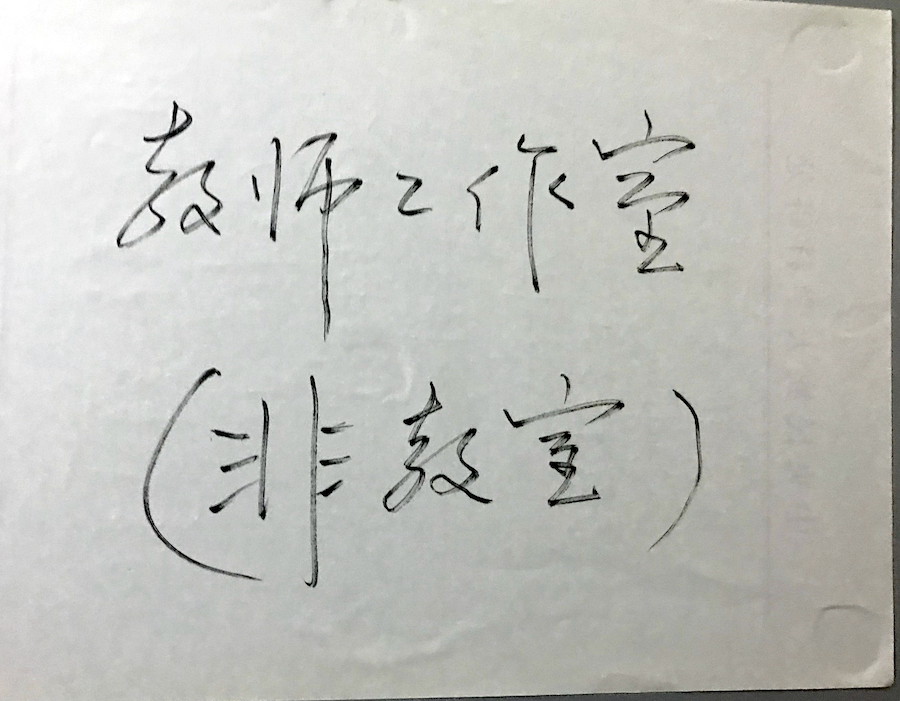
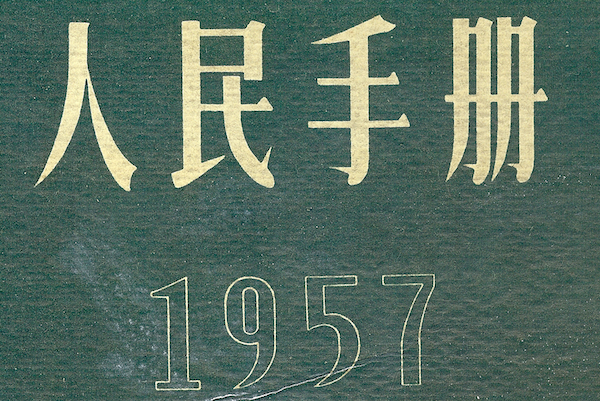
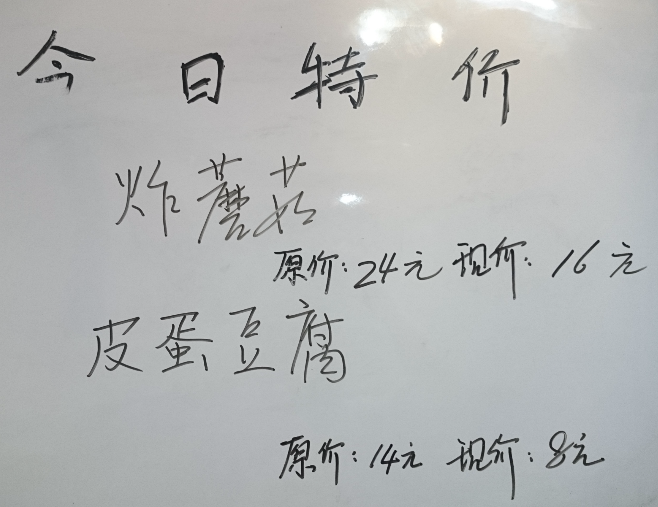
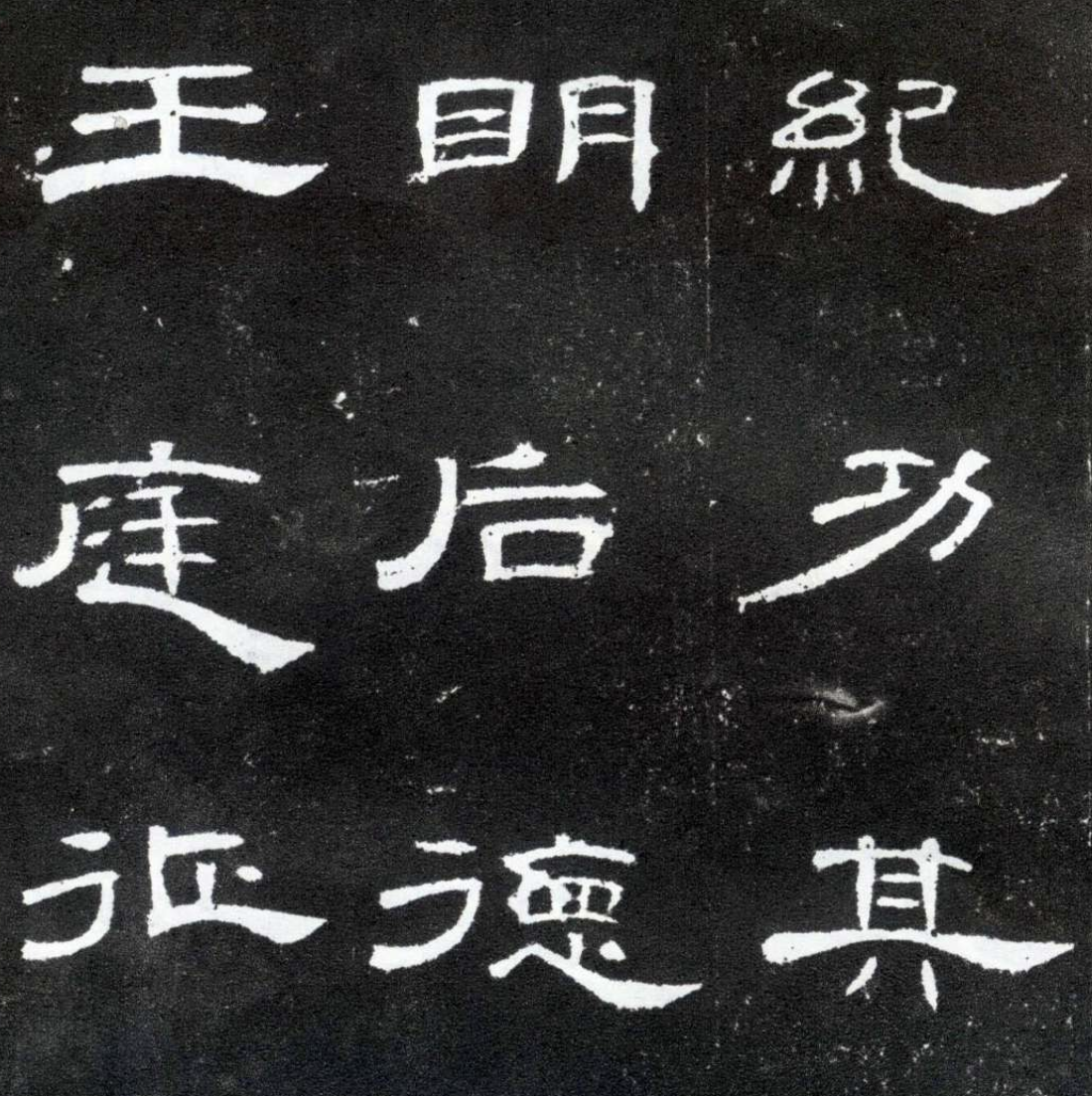
First, check the description in Section 12.3.1 in A grammar of Mandarin (especially Figure 12.4)
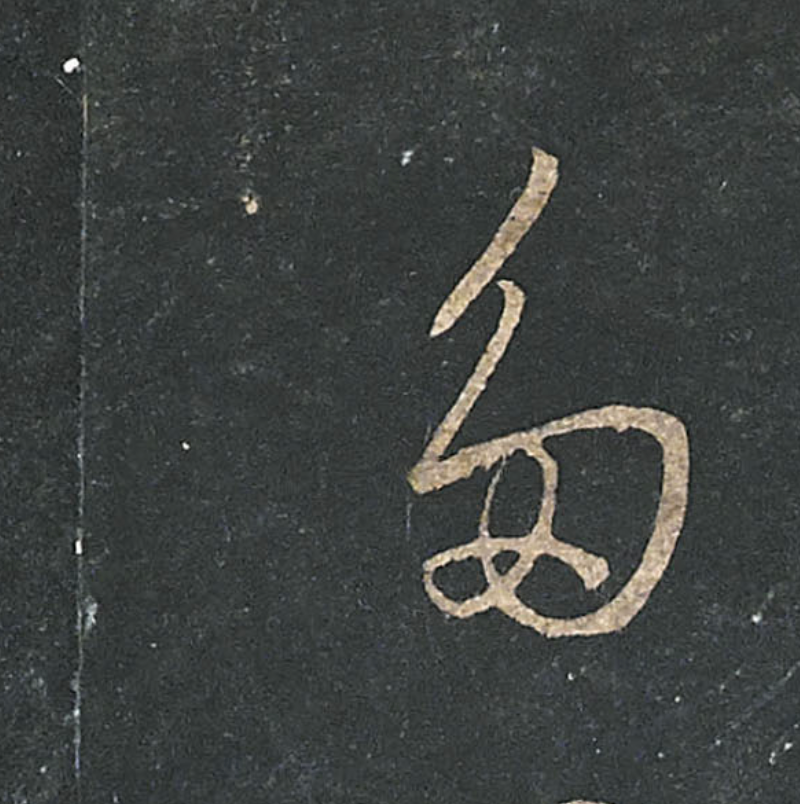
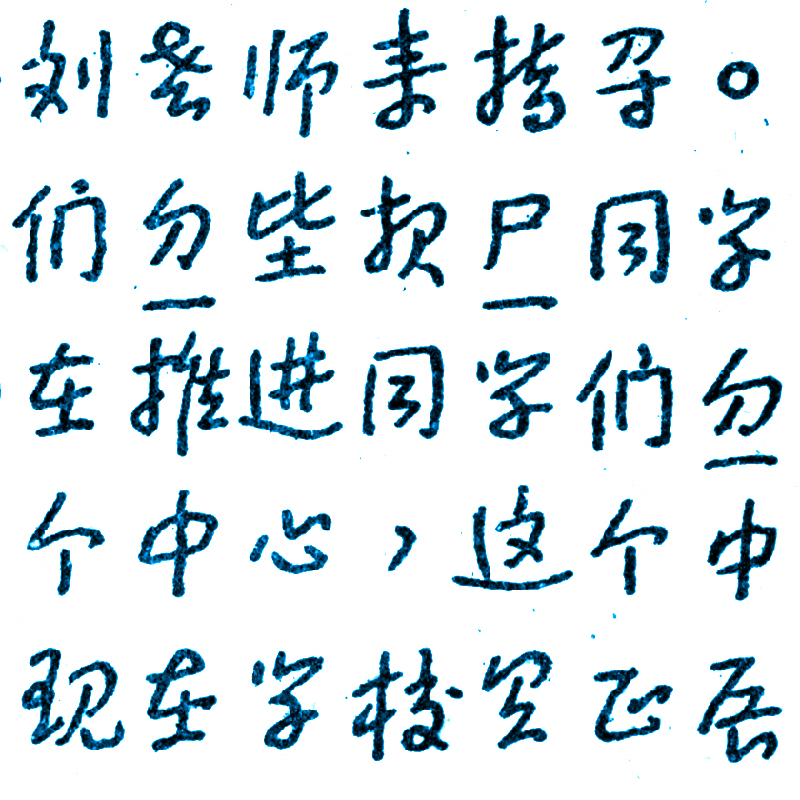
Next, identify the English and Mandarin names for the script styles illustrated below.
Or, if the image does not correspond to any of the script styles mentioned there:
then please identify a Mandarin and/or English name, based on the materials covered in class.

This week, we are finding out some facts from the fifties and sixties which helped shape the Chinese script's current destiny.
After the Second World War (1940-1945), China continued to fight its own war, leading to the establishment of the People's Republic in 1949. In the first two decades of the new state, social revolution went hand-in-hand with major script reforms.
In Kraus' (1991) contribution, we learn about the many dilemmas surrounding the selection of a national script.
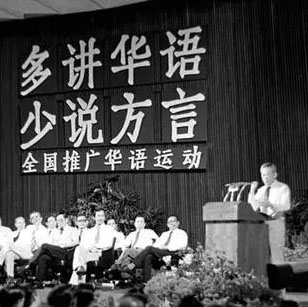
Internationally, too, these developments soon had a lasting effect. The example shown here is from Singapore, which not only recognizes Mandarin as one of its national languages, but has also adopted the simplified character script.
Kraus (1991)
"The failed assault on Chinese characters"
In: Richard Kurt Kraus, Brushes with power.
Berkeley: University of California Press, 1991, pp. 75-82.
Wiedenhof (2015)
"Features of the Chinese script"
In: Jeroen Wiedenhof, A grammar of Mandarin.
Amsterdam: John Benjamins, 2015,
§ 12.3 (including § 12.3.1 through § 12.3.4), pp. 365-384.
Availability at Leiden:
- from the Asian Library, on the linguistics handbooks shelves;
- as a downloadable PDF, through the University Library catalogue
49. Left over from last week: Assignment 48.
We covered the first six items last week, so we start from photo #7.
50. Read the two new texts and bring your notes.
We will discuss your questions and remarks in class.
"The failed assault on Chinese characters"
51. On p. 75 of Kraus' text, he notes the Korean use of "a more clearly phonetic" script instead of characters.
a. What is the name of this script? How and when did it come into being?
b. How "clearly phonetic" is it?
c. If the Chinese script is not "clearly phonetic", then how could it best be characterized?
d. The phonetic nature of the native Korean script have engendered some enthousiasm about its qualities among linguists and educators.
For an example, see "In praise of: The world's best writing system, which states:
"it turns out that different writing systems are not all equally well equipped to capture the full range of a language’s grammar".
Give a concrete example of one grammatical feature, in a language of your choice, plus a writing system unequipped to capture that feature.
52. Kraus' chapter repeatedly mentions John DeFrancis' work.
a. If you are not familiar with John DeFrancis' name:
do look up some details about his life and work.
b. On p. 78, Kraus states that "DeFrancis points out that..." without quoting a source.
Can you trace this citation?
c. Kraus paraphrases DeFrancis' statement that in the 1950s, "no one in China was willing to appear to challenge Stalin on this point".
On what point, exactly?
53. P. 81 shows a woodcut from a 1958 issue of the journal 中国妇女 Zhōngguó Fùnǚ "Women of China".
a. Can you identify the characters in this illustration?
b. Can you translate them? (
A friendly reminder: prepare all your answers in writing)
54. On p. 82, Kraus mentions a childhood memory from Chinese opera singer 新凤霞 Xīn Fèngxiá (1927-1998) featuring a "discarded cap of a fountain pen".
a. When and where were fountain pens invented? What writing tool(s) where they meant to replace or supplement?
b. When were they first used in China? What writing tool(s) did they replace, or supplement?
"Features of the Chinese script"
55. The first paragraph of p. 365 describes what characters "consist of".
What consequences can this phrase "consist of" have in terms of linguistic methodology?
56. For each of the stroke-order principles in Table 12.5, try to find at least one exception.
57. For native speakers of Mandarin:
in Table 12.10, compare these letter names with your own pronunciation, and note down any differences.
58. In Table 12.11, can you think of punctuation marks which are missing?
59. For "the sound /s/" at the bottom of page 371, check that you remember what the slashes transcribe.
Can you write these three examples – cent, sent and scent – using the same mode of transcription?
60. At the bottom of p. 372, please formulate a (sinographically) critical note on the English translation "A book from the sky".
61. The small text of p. 375, mentions a "danger of circularity".
Please formulate this danger in two or three sentences of your own.
62. Some historical aspects of the character 年 are mentioned on p. 377.
What is the linguistic term for the relationship between 'millet', 'harvest' and 'year' discussed here?
63. Section 12.3.3 discusses the 六書 liù shū 'Six Categories of the Script'.
In his 2009 "Ludic writing" article, Wolfgang Behr proposes a highly original model for the analysis of the relationship written characters and linguistic signs.
This model, in his words (2009: 291)
"allows us to identify certain character structures beyond the coverage by the traditional “six scripts” (liùshū 六書) theory of the Hàn dynasty, [...] whose inadequacies have long been noted and discussed."
Can you give concrete examples (quoting individual characters) of such "inadequacies"?
64. Table 12.14 illustrates the large propertion of infrequent characters.
Can you identify one or more social factors which have contributed to the survival of infrequent characters?
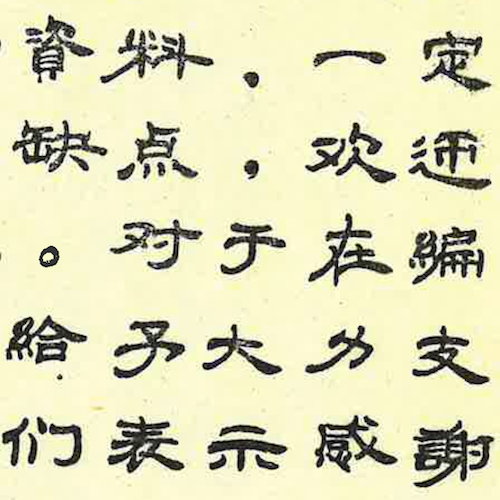
...and an encoreCharacters on the menu in Hong Kong
65. The news item carrying this photo mentions the term 非遺文化.
How would you translate this term; and/or what does it mean?–Thanks to Yin Kwaan Mok for materials and suggestions
In week 3, we looked at 20th-century reforms and standardization, both in the spoken and in the written domain.
Throughout history, these two domains, language and script, have often been treated as indistinguishable: not just in the public eye, but also in learned treatments and official policies. Even today, a principled distinction between these two domains often remains the prerogative of linguistics.
This week zooms in on technical terms and issues in the description of scripts and languages in China.
Wiedenhof (2015)
Characters, syllables and morphemes (pp. 291-297)
In: Jeroen Wiedenhof, A grammar of Mandarin.
Amsterdam: John Benjamins, 2015,
- § 10.1.2 "Free and bound morphemes" (pp. 291-293)
- 10.1.3 "Characters, syllables and morphemes" (pp. 293-297)
Availability at Leiden:
- from the Asian Library, on the linguistics handbooks shelves;
- as a downloadable PDF, through the University Library catalogue
66. As agreed in class, your third (and last) hand-in assignment has been postponed by one week.
It will consist of a pre-final version of your term paper.
The new deadline is 28 April 2025.
Please note the format requirements.
67. These materials remains from our previous session:
today, we start from assignments 55 to 64.
68. Read the text (pp. 291-297) and bring your notes.
Please pay special attention to the examples provided here, and check if you can find comparable examples yourself.
In class, we will first discuss your questions and remarks about the text.
As demonstrated in the past few weeks, we are developing special skills to use language and script to describe language and script.
This week offers more hands-on practice in these skills, with special emphasis on your own term-paper project.
Image source: clarity Design, Zürich
69. Please charge your laptop and bring it to class.
70. Bring your draft version(s), my comments, your notes, and any literature to work with in class.
We will be reviewing your writing process, progress, and any problems on the way.
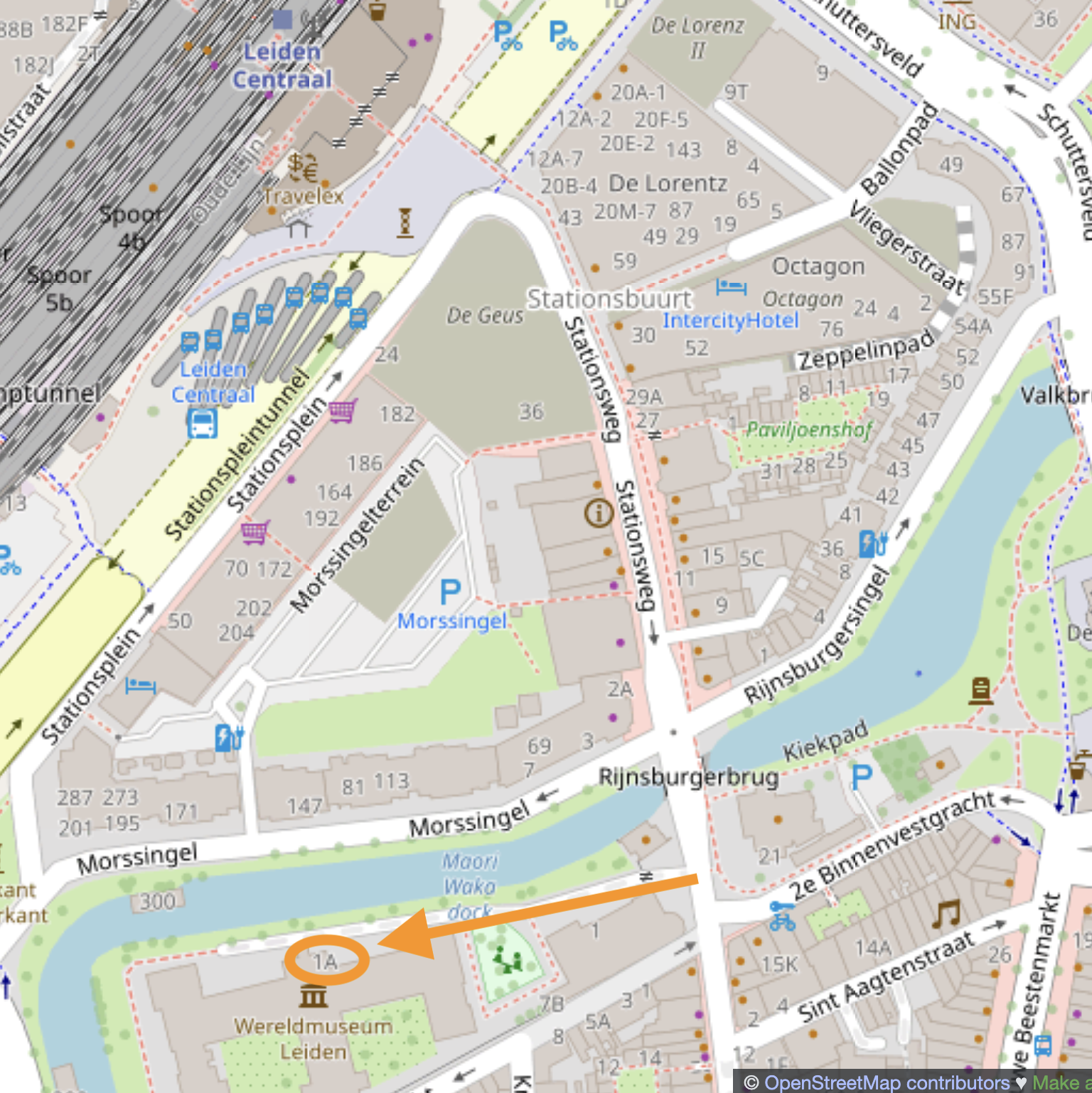
Today's venue is the entrance of the Leiden Wereldmuseum.
We meet at 3:00pm
After you enter the iron gates from Steenstraat, you find the museum entrance by continuing straight, along the canal at your right-hand side.
![]()
Click image for map details
Street address:
Steenstraat 1A
2312 BS Leiden
Image source:
OpenStreetMap, 2025
The Leiden Asian Library has a dedicated Course Reserve Shelf
providing books and journal issues selected for our course
This Course Reserve Shelf (in Dutch: Collegeplank) has number ALCRS00237.
Linguistics in general
- Crystal, David, The Cambridge encyclopedia of language. Cambridge: Cambridge University Press, 1987, third edition 2010.
- Matthews, P.H., Concise Oxford Dictionary of Linguistics. New York: Oxford University Press, 1998 and later editions.
- SIL Glossary of linguistic terms
Chinese linguistics
- Dong, Hongyuan, A history of the Chinese language. Abingdon: Routledge, 2014, second edition 2021.
- Norman, Jerry, Chinese. Cambridge: Cambridge University Press, 1988.
- Wiedenhof, Jeroen, A grammar of Mandarin. Amsterdam: John Benjamins, 2015.
Writing & scripts in general
- Daniels, Peter T., and William Bright, The world’s writing systems. Oxford: Oxford University Press, 1996.
- Omniglot / Alphabets & writing systems. Omniglot, the online encyclopedia of writing systems and languages, 2022.
Chinese writing & writing Chinese
- Behr, Wolfgang, “In the interstices of representation: Ludic writing and the locus of polysemy in the Chinese sign”, in: The idea of writing: Play and complexity. Leiden & Boston: Brill, 2010, pp. 281-314.
- Boltz, William G., The origin and early development of the Chinese writing system. New Haven: American Oriental Society, 1994.
- Erbaugh, Mary S., Difficult characters: Interdisciplinary studies of Chinese and Japanese writing. Pathways to Advanced Skills Series, Volume VI. Columbus: National East Asian Language Resource Center, Ohio State University, 2002.
- Galambos, Imre, Orthography of early Chinese writing: Evidence from newly excavated manuscripts. Budapest, Department Of East Asian Studies, Eötvös Loránd University, 2006.
- Handel, Zev, “Can a logographic script be simplified? Lessons from the 20th century Chinese writing reform informed by recent psycholinguistic research”. Scripta, Volume 5, 2013, pp. 21-66.
- Handel, Zev, Sinography: The borrowing and adaptation of the Chinese script. Leiden: Brill, 2019.
- Kelly, Thomas, The inscription of things: Writing and materiality in early modern China. New York: Columbia University Press, 2023.
- Kraus, Richard Kurt, Brushes with power. Berkeley: University of California Press, 1991.
- Kuzuoǧlu, Uluǧ, Codes of modernity: Chinese scripts in the global information age. New York: Columbia University Press, 2024.
- Lunde, Ken, CJKV information processing. Sebastopol: O’Reilly, 1999.
- McCawley, James D., The eater’s guide to Chinese characters. Chicago: University of Chicago Press, 1984.
- Qiu, Xigui / 裘锡圭 [Qiú Xīguī], Chinese writing / 文字學概要, translated by Gilbert L. Mattos en Jerry Norman on the basis of two Chinese text editions: 北京 Peking: 商务印书馆 Shāngwù Yìnshūguǎn 1988 and 台北 Taipei: 萬卷樓 Wànjuànlóu 1994. Berkeley: The Society for Study of Ancient China and The Institute of East Asian Studies, University of California, 2000.
- Unger, J. Marshall, Chinese characters and the myth of disembodied meaning. Honolulu: University of Hawai‘i Press, 2004.
- Zhou, Youguang / 周有光 [Zhōu Yǒuguāng], The historical evolution of Chinese languages and scripts / 中国语文的时代演进, bilingual edition, English translation by Zhang Liqing / 张立青 [Zhāng Lìqīng]. Ohio State University: National East Asian Languages Resource Center, 2003.

Databases
- Chinese Type Archive / 字體資料庫
- 汉典
- 國際電腦漢字及異體字知識庫 / International Encoded Han Character and Variants Database.
- 汉字全息资源应用系统
Chinese Etymology / 字源
- 小學堂文字學資料庫
- 宋代墓志铭数据库 / China Stone Inscription Database – login @Leiden University Libraries
- zi.tools / 字統网
Journals
Journal of Chinese Writing Systems – login @Leiden University Libraries
- SCRIPTA: An International Journal of Codicology and Palaeography
Traditional texts online
- Scripta Sinica / 漢籍全文資料庫 – login @Leiden University Libraries
- 《說文解字》 @ Chinese Text Project (a.k.a. ctext.org)
- 《康熙字典》 網上版